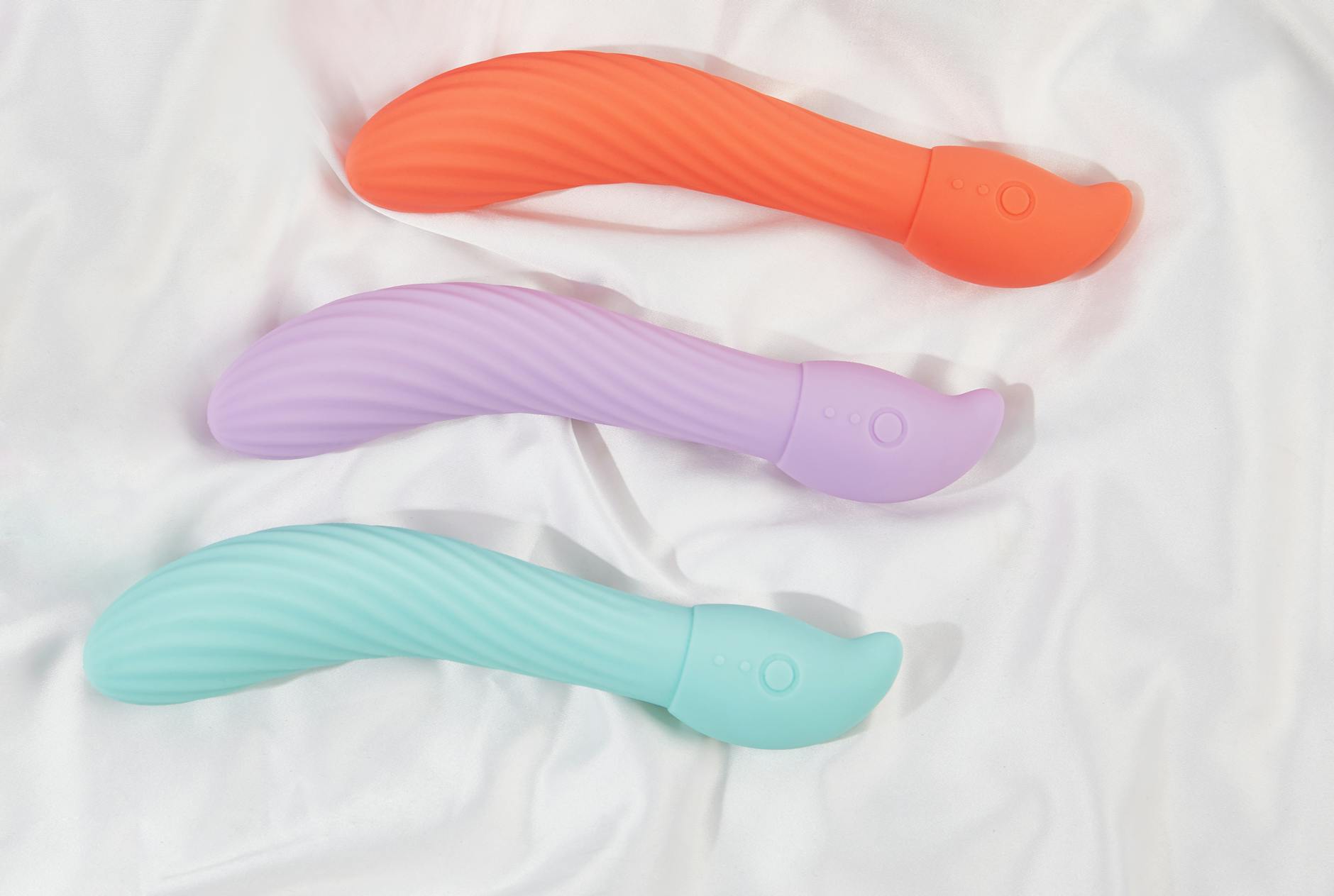
Here's the thing nobody explains about pleasure and your cycle
Your body is not a flat line. Every week, hormones shift. Blood flow changes. Nerve sensitivity rises and falls. And yes, the way your clitoris responds to stimulation shifts too.
If you've noticed that a lemon vibrator feels wildly different depending on when in your cycle you use it, you're not imagining it. This is real physiology, not mood. And once you understand the pattern, you can actually use it.
How your cycle changes sensitivity
Estrogen and testosterone fluctuate across your four cycle phases, and both hormones directly affect how sensitive your clitoris is to touch and vibration.
During the follicular phase (days 1-13, roughly), estrogen is climbing. Your skin gets more sensitive overall. Blood flow to your genitals increases gradually. By the time you hit ovulation, your clitoris is plumper, more engorged with blood, and way more responsive to stimulation. A lemon vibrator pattern that felt gentle last week might feel intense now.
Then comes the luteal phase (days 15-28). Progesterone rises. Estrogen dips and rises again. For many people, sensitivity doesn't disappear, but it becomes more diffuse. You might need slightly longer warm-up time. The intensity that felt perfect at ovulation might feel too sharp. Some people need to drop down a pattern number and add more pressure instead.
And during your period (the menstrual phase), everything resets. Estrogen and testosterone are both low. Your clitoris is less engorged. But here's the plot twist: the pelvic floor relaxes during menstruation, which some people experience as deeper, more interior satisfaction from vibration.
What actually changes when you use a lemon sucker or vibrator
Let's break down each phase specifically.
Menstrual phase (days 1-5). Blood flow to your clitoris is lower. You might need more warm-up time. Patterns 1-3 on a Hello Nancy lemon clitoral vibrator often feel more satisfying than jumping straight to high intensity. Your pelvic floor is naturally looser right now, which some people love for internal vibration if they're using a toy that reaches inside. Cramping sometimes improves with orgasm, partly because the pelvic floor contraction during climax helps release tension.
Follicular phase (days 6-13). Sensitivity is climbing steadily. By day 10-12, your clitoris is noticeably more responsive. You might discover that patterns you normally use feel too strong by mid-week. Arousal builds faster. The warm-up that took 20 minutes last week might take 10. Many people report that orgasms in this phase feel sharper, more pointed, and come more easily.
Ovulation (days 14-15). Peak sensitivity. Peak blood flow. Your clitoris is maximally engorged. This is when a lemon vibrator might feel most intense, most immediately satisfying. Some people need less time at lower intensities because arousal jumps fast. Others find that the peak sensitivity makes high intensities almost uncomfortable, so they actually back off and use lower patterns with more deliberate, slower motion. There's no rule here except what your body tells you.
Luteal phase (days 16-28). Progesterone is doing its thing, which tends to flatten some of the sharp sensation from ovulation. You're not numb. You're not broken. You're just experiencing pleasure in a different register. Many people describe luteal pleasure as less pointy and more full-bodied. A lemon sucker might feel less precise now, and you might prefer a pattern with a broader rhythm. Warm-up time creeps back up. Some people need more pressure, not more speed.
The mood piece is real too
Your cycle doesn't just change your physical sensitivity. It changes your mental headspace, and that absolutely affects pleasure.
During ovulation, progesterone is still low, and estrogen is peaking. You're more socially confident, more sexually forward, more willing to take risks. Your desire feels clearer and more active. Pleasure doesn't feel like something you're receiving. It feels like something you're claiming.
During the luteal phase, progesterone is high. For some people, that's grounding and sensual. For others, it triggers a kind of inward turn. Desire doesn't disappear, but it becomes quieter. The intention to seek pleasure matters more. You might need your partner to initiate more. You might need more foreplay because your brain isn't as automatically in the game.
Neither is better. They're different. And if you can name the difference instead of assuming you've suddenly lost desire, you can work with it instead of against it.
A practical framework for using your lemon vibrator across your cycle
Here's what I recommend to clients:
Track three things for one full cycle: the pattern number you use, how long your warm-up takes, and how the sensation feels in one word (sharp, diffuse, full, tingly, whatever lands for you). You'll see patterns emerge by week two.
Adjust intensity, not just speed. If a pattern feels too sharp at ovulation, you don't need to turn the vibrator off. You need to change how you apply it. Less direct contact. A longer, slower motion. Pausing between surges instead of continuous stimulation. A lemon clitoral vibrator's suction-and-release pattern is forgiving this way. You can use the exact same device differently in different phases.
Give yourself permission to want something different. If you're mid-luteal and your lemon vibrator feels less interesting than it did last week, that's not a sign you're losing sensation. It's a sign your nervous system wants something different. Maybe you want your partner involved. Maybe you want less goal-oriented pleasure and more exploration. Maybe you want something inside and something outside at the same time. Listen to that.
Warm-up matters more than you think. During low-sensitivity phases, five minutes of foreplay before touching your clitoris with any toy makes a massive difference. Your body needs time to engorge and prepare. A lemon vibrator is intense by design. It works best on primed tissue.
When the cycle phase thing doesn't fit
If you're using hormonal birth control, your hormone levels are flat by design. You won't see the same dramatic sensitivity shifts across the month. That's actually useful information. Some people prefer that flatness. Others find they miss the variation.
If you have a cycle length that's longer or shorter than 28 days, adjust the day ranges above to match your actual cycle. Everything else stays the same.
If you're tracking and not seeing a pattern, that's okay too. Some people are genuinely less cycle-sensitive than others. Genetics, baseline hormone levels, and just individual variation all play a role. You don't need to feel cycle-dependent pleasure to have wonderful, satisfying pleasure.
The pleasure payoff
Understanding how your cycle shapes sensation isn't about becoming a slave to biology. It's about removing the mystery and the guilt. You're not less interested in sex during certain weeks. Your body is literally preparing you differently. Once you know that, you can plan better. You can set yourself up for success. You can stop assuming something's wrong when, in fact, something's just different.
A Hello Nancy lemon clitoral vibrator designed with multiple intensity levels is useful precisely because you need options. Your body deserves tools that meet it where it is, not where it was last week.
People also ask
Can your cycle affect how your clitoris responds to vibrators?
Absolutely. Estrogen and testosterone both affect blood flow to your clitoris, nerve sensitivity, and how quickly arousal builds. During ovulation, when estrogen peaks, your clitoris is more engorged and responsive. During menstruation, when both hormones are low, sensitivity is lower but sensation can actually feel deeper. This isn't mood. It's measurable physiology.
Is it normal for a lemon vibrator to feel too intense during ovulation?
Completely normal. The increased blood flow and nerve sensitivity during ovulation means stimulation that felt perfect last week might feel overwhelming now. Try dropping down two pattern levels, applying the vibrator with less direct pressure, or using it over a thinner fabric instead of directly on skin. Your nervous system isn't broken. It's just louder right now.
Should you use lemon sexual toys differently during your period?
You can, but you don't have to. Some people prefer gentler patterns and longer warm-up time. Some people find that the relaxation of the pelvic floor during menstruation makes sensation feel richer, not less. And some people just want to avoid penetrative toys during their period. All of that is fine. Listen to what feels good instead of following rules.
Does hormonal birth control change how lemon vibrators feel?
Yes. Hormonal birth control keeps your hormone levels flat throughout the month, so you won't experience the sensitivity swings that come with a natural cycle. Some people appreciate that consistency. Others miss the variation. Neither is a reason to start or stop birth control. It's just information about how your pleasure might feel different.
Can you use a lemon clitoral vibrator every day across your cycle?
Yes. The cycle-related changes are about sensitivity, not damage. Your clitoris won't get tired or less responsive from regular vibrator use. Frequency is separate from cycle phase. What matters is comfort and what your body is telling you. If a pattern feels too intense one week and perfect the next, adjust. If you want daily pleasure and your body agrees, that's fine too.
Why does pleasure feel different in the luteal phase compared to ovulation?
Progesterone rises in the luteal phase, which tends to calm and deepen sensation compared to the sharpness of ovulation. Your brain chemistry also shifts. You're less socially outgoing, more introspective, and pleasure often feels more full-bodied and less target-focused. This isn't depression. It's a different flavor of pleasure that some people love and others need to warm up to.