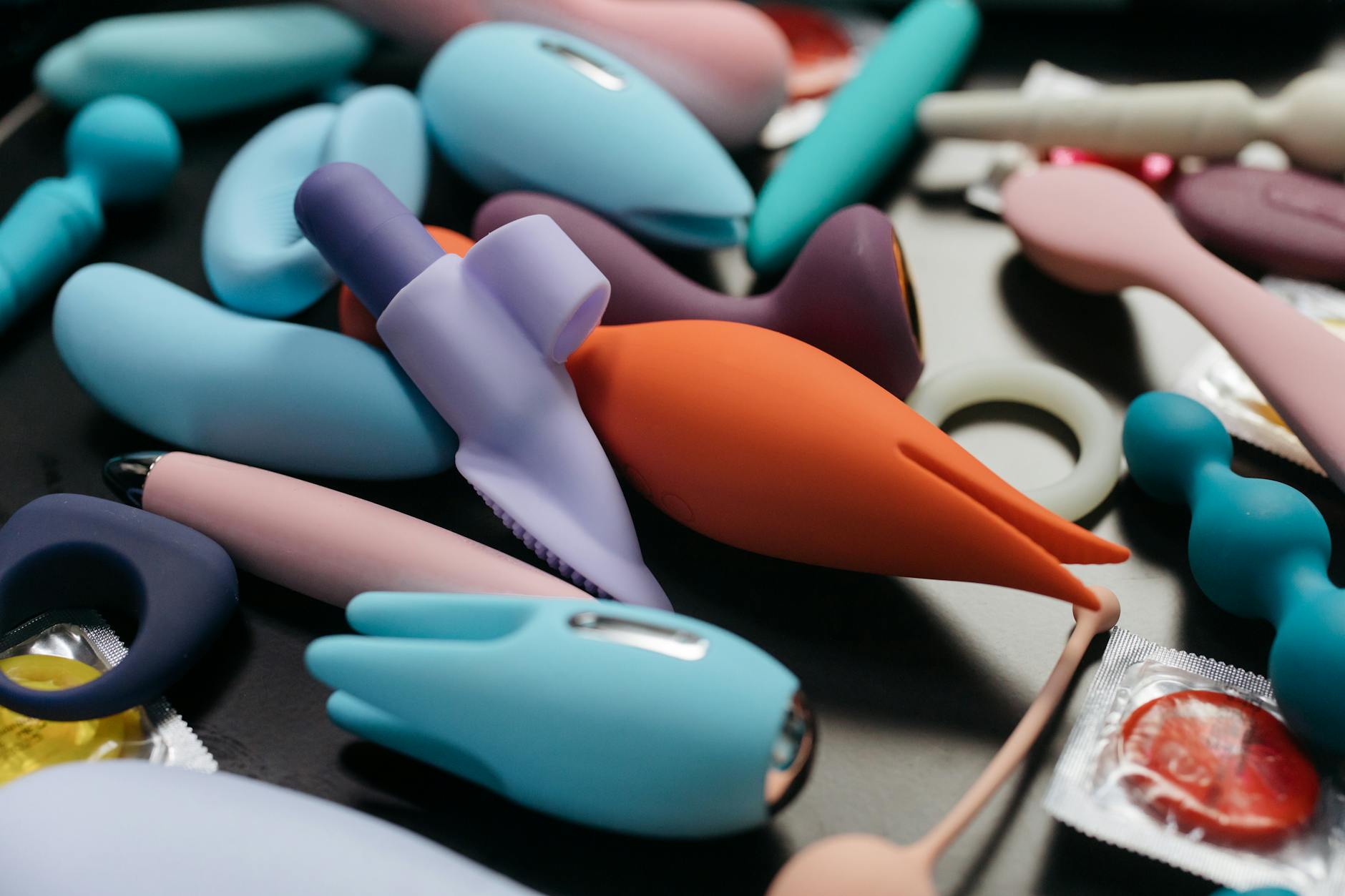
Here's what nobody tells you about birth control and pleasure
Your birth control is in your bloodstream right now, reshaping how your nervous system responds to touch. Most people know this changes their mood or their skin. What they don't realize is that it changes pleasure, too. Not in a scary way. In a way that actually matters for choosing the right tool.
The lemon clitoral vibrator approach works differently than traditional vibrators precisely because birth control hormones alter sensitivity in ways that favor air-suction stimulation over direct vibration. Understanding why changes everything.
How hormonal contraception shifts sensation
Hormonal birth control (the pill, the patch, the ring, the shot) floods your system with synthetic estrogen and progestin. These aren't the same as your body's natural hormones. They're lower doses, they're continuous, and they flatten the cyclical peaks and valleys your body would otherwise experience.
Here's what happens physically:
First, blood flow to the vulva changes. Natural estrogen promotes vasocongestion (the engorgement that happens during arousal). Synthetic hormones do this, but less dramatically and more consistently. Second, tissue sensitivity shifts. The clitoris becomes less easily irritated but also sometimes slower to warm up. Third, natural lubrication production changes. Some people on hormonal birth control produce less, some produce the same, some actually produce more. The variation is wild.
None of this means pleasure disappears. It means pleasure becomes different. And "different" actually favors the suction-based approach of lemon clitoral vibrators.
Why lemon vibrators fit hormonal shifts better
Traditional vibrators rely on high-frequency vibration against tissue. When synthetic hormones lower tissue sensitivity and mucosal thickness, that vibration can feel either too weak or, paradoxically, too intense. You're hunting for the right speed, and your body's responsiveness keeps shifting.
Lemon clitoral vibrators use air-suction stimulation instead. This works by creating a gentle vacuum seal around the clitoris, stimulating the nerve endings without direct mechanical vibration. Why does this matter with hormonal birth control?
The mechanism is gentler on thinner tissue. Hormonal contraception slightly reduces vaginal and vulvar tissue thickness. Air suction distributes pressure evenly rather than concentrating it in one spot, so thinner tissue responds better without becoming irritated.
The intensity feels consistent. Because suction works differently than vibration, it doesn't rely on your body's moment-to-moment lubrication levels or blood flow. Your birth control won't throw off the sensation the way it might with a traditional vibrator.
The warm-up curve matches hormonal rhythms. Synthetic hormones mean arousal takes longer to build. Lemon clitoral vibrators create an expanding sensation rather than an immediate jolt, which mirrors how your body actually responds when hormones are flattening your natural arousal spike.
The real data on birth control and sensation
Research on hormonal contraception and sexual response shows a curious split. About 40% of people report no change in pleasure or orgasm intensity. About 35% report improved pleasure (lower anxiety, no period worry, more relaxation). And about 25% report some decrease in desire or sensation intensity.
The people in that last group often think something is wrong with them. Usually, they just need a tool that matches their shifted neurology. That's where the lem vibrator excels. The suction mechanism stimulates the entire clitoral complex, including internal branches, rather than just surface stimulation.
If you've been on the same birth control for years and your old vibrator stopped working as well, this is almost certainly what's happening. Your body adapted. Your nervous system recalibrated. The tool needs to recalibrate too.
What happens with different birth control methods
The pill flattens your hormones consistently. Your sensitivity becomes stable but lowered.
The hormonal IUD (like the Mirena) releases hormones directly into your bloodstream and also into your uterus and pelvis. People often report stronger sensation changes with hormonal IUDs because the local hormonal concentration is higher. Lemon clitoral vibrators actually help here because the suction stimulates the pelvic floor and internal clitoral tissue in ways traditional vibrators don't.
The implant and the shot are similar to the IUD in that they create consistent, continuous hormone delivery. Again, this favors suction-based tools.
The patch and ring are somewhere between the pill and the IUD in terms of how consistently they deliver hormones. The variation is smaller than your natural cycle, but slightly larger than the pill.
None of these are "bad" for pleasure. They all just shift your baseline sensitivity in ways that work better with certain tools.
Tuning your technique to your birth control
If you're on hormonal birth control and using a lemon vibrator for the first time, a few things will help you get the most out of it.
Start with the gentlest setting. Because hormonal contraception can make you slower to warm up, you might think you need maximum intensity immediately. Wrong. The lemon clitoral vibrator works in layers. Pattern 1 or 2 often feels like almost nothing, then suddenly your body wakes up. Give it 10 to 15 minutes.
Use lube even if you think you don't need it. Hormonal birth control can make lubrication inconsistent, which changes how the suction seal forms. Water-based lube (never silicone with a silicone toy) makes the seal more reliable and the sensation more consistent.
Warm up longer than you think you should. Because synthetic hormones flat-line your natural arousal spike, your body needs more time to recognize stimulation. Twenty to thirty minutes of foreplay before reaching for the lem vibrator isn't excessive. It's just how your body works now.
Pay attention to where you are in your pack cycle. Even on the pill, there's a 7-day break week (or a week of placebo pills) where hormones drop. Some people find that sensation shifts slightly. That's normal. Your body is still slightly responsive to those dips, even though the overall hormone level stays lower.
When birth control is masking something else
Not every shift in pleasure is from birth control. Sometimes birth control is the convenient explanation for something else going on.
If your pleasure has dropped dramatically or completely, and lemon clitoral vibrators work better with first-time users, that's worth exploring. Same if you've had the same birth control for years with no change until recently. That suggests something else shifted (stress, relationship dynamics, medication, health change).
Depression and anxiety often arrive in birth control packages. Sometimes the hormone shift causes it. Sometimes your life circumstances do, and the hormones are getting blamed. A good therapist or your doctor can help sort this. But know that sensation changes from hormonal contraception are reversible and manageable. It's not permanent damage.
If you're on an antidepressant AND hormonal birth control, you're dealing with two layers of hormonal modulation. This is actually fine, but it means your arousal timeline is slower than either medication alone would make it. Again, this is where air-suction clitoral vibrators shine. They don't require the same rapid physiological response that traditional vibrators do.
Switching birth control and your pleasure setup
If you're thinking about changing birth control methods, know that your pleasure response might shift again. This is temporary. Your body will recalibrate in 2 to 3 months.
When you switch, your old pleasure tools might feel suddenly off. That doesn't mean something is wrong. Your sensitivity is recalibrating. Lemon clitoral vibrators are particularly good during transition periods because the suction mechanism is forgiving as your body re-learns its response patterns.
Some people use this transition as an excuse to try new tools anyway. That's fine. But don't assume your old toy is broken. It's just not matching your new baseline.
The essential takeaway
Hormonal birth control is a fact of life for millions of people with vulvas. It changes how your body responds to pleasure, and that's not a problem to solve. It's just information to use. Lemon clitoral vibrators work with these hormonal shifts rather than against them, which is why so many people find them more reliable than traditional vibrators once they're on hormonal contraception.
Your birth control is valid. Your pleasure deserves a tool that matches your actual neurology, not the idealized body birth control companies wrote their instructions for. That's what lemon vibrators do.
People also ask
Does hormonal birth control actually reduce sexual desire or is it just in my head?
It's both. About 25% of people on hormonal contraception report measurable changes in desire. But it's also true that anxiety about side effects, or cultural messaging about birth control "ruining your sex drive," can amplify the experience. The physical shift is real and manageable. The psychological component matters too. Working with a therapist alongside your doctor often helps separate them.
Can I use a lemon clitoral vibrator if I'm on the hormonal IUD?
Absolutely. In fact, many people on hormonal IUDs find lemon clitoral vibrators work even better than on the pill because the localized hormone concentration can create stronger sensation shifts. The air-suction mechanism is particularly good at reaching past the tissue changes a hormonal IUD can create.
Will switching from the pill to a different birth control method change how the lem vibrator feels?
Probably, temporarily. Your sensation will shift as your hormones recalibrate, usually within 2 to 3 months. The lem vibrator is forgiving during this period because it doesn't depend on consistent tissue thickness or lubrication the way traditional vibrators do. You might need to adjust your warmup time or lube approach, but the tool itself usually continues to work well.
What if my pleasure got worse after starting birth control and hasn't improved?
That's worth bringing to a doctor, especially if it's been longer than 3 months. Sometimes the wrong birth control method for your body creates persistent changes. Sometimes it's not the birth control at all. And sometimes reducing sensitivity from antidepressants is happening simultaneously and making everything feel more dramatic. A menopause-trained GP or sex therapist can help untangle this.
Is lube necessary with a lemon vibrator if I'm on birth control?
Not always, but often yes. Hormonal birth control makes lubrication inconsistent. Some days you'll produce plenty naturally. Other days the suction seal works better with a little water-based lube. Keep some nearby and you'll know immediately whether you need it. Water-based is the only option with silicone toys.
Can I use the same birth control and get my pleasure back without switching tools?
Yes, sometimes. Longer warm-up time, better communication with your partner if you have one, and adjusting your expectations about arousal speed often help. But if you've tried those and the pleasure gap is still there, a different tool designed for lower tissue sensitivity can make a real difference. There's no shame in letting your tool evolve as your body does.
References and sources
The research on hormonal contraception and sexual response draws from clinical literature including studies in the Journal of Sexual Medicine, meta-analyses on hormonal contraception side effects, and clinical observation from sex medicine specialists. The physiological mechanisms of air-suction stimulation versus traditional vibration are documented in research on clitoral architecture and sensory response patterns. Consult your healthcare provider for personalized advice about birth control and sexual health.