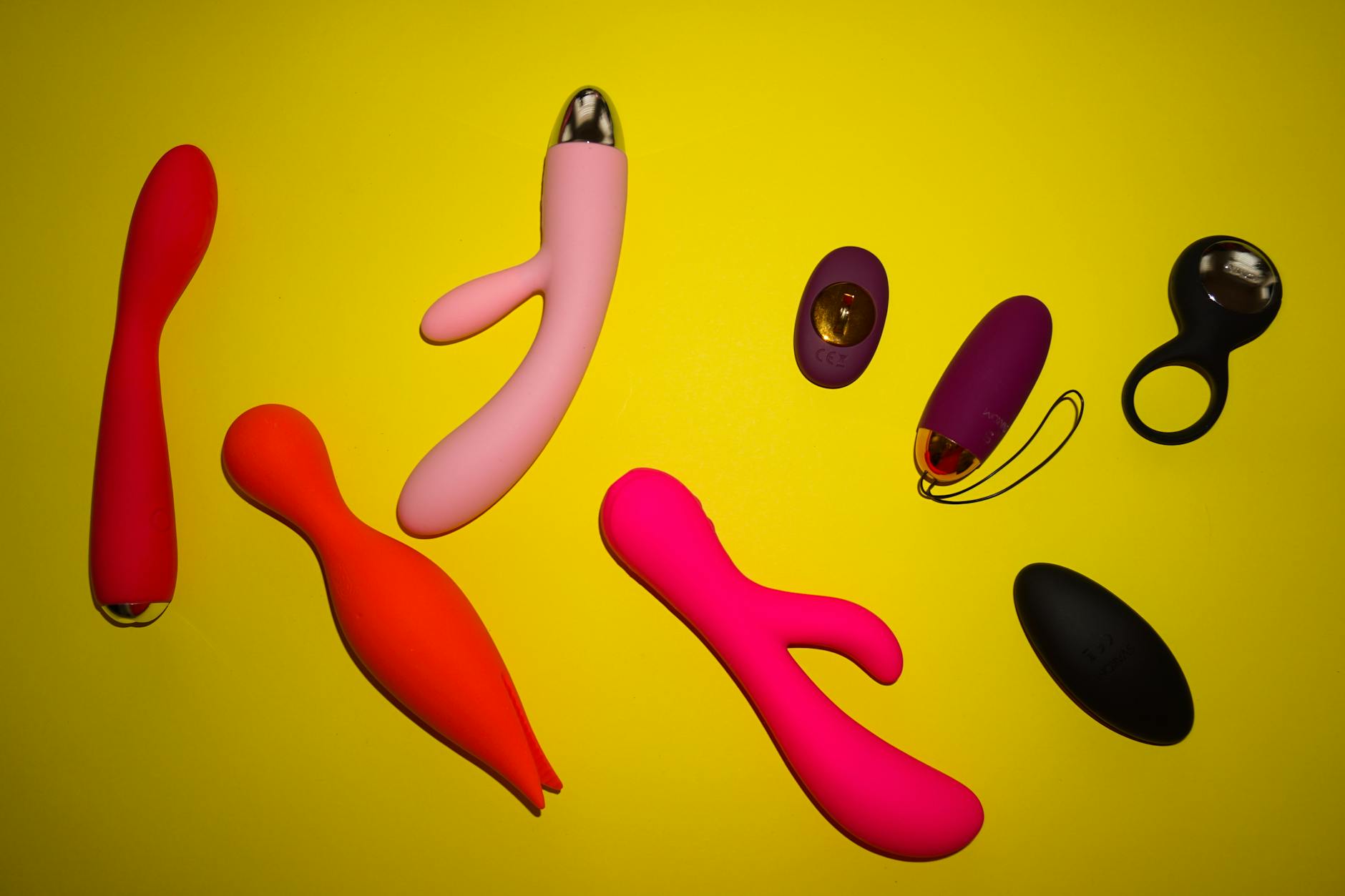
The foreplay shift nobody talks about
Here's what I hear in my practice constantly: couples start using lemon clitoral vibrators together and suddenly the dynamic changes. Not because the toy is magic, but because introducing one forces a conversation that needed to happen anyway. That conversation is about desire, timing, and what each person actually wants from the experience.
Lemon vibrators are different from traditional vibrators. They're quieter, more precise, and they work with your body's natural arousal rather than against it. That makes them uniquely good for foreplay with a partner, but only if you approach them strategically.
Before you bring it into the bedroom
The mistake couples make is treating the toy like a surprise. "Look what I got." That triggers defensiveness, insecurity, or the assumption that you're unhappy with the sex you're already having. Instead, frame it as an exploration you're doing together.
The conversation goes like this: "I've been curious about trying something new during foreplay. It's supposed to feel really different. Want to experiment?"
That's it. No apology. No explanation of what's "wrong" with current foreplay. No comparing it to anything. Just genuine curiosity framed as a mutual adventure.
If there's hesitation, listen. The most common concerns are: "Does it mean I'm not enough?" or "Will it change our dynamic?" Address those directly. "It's not about adding something better. It's about adding something different. I want to experience this with you." That distinction matters.
Timing in foreplay: when to introduce it
Lemon vibrators work best when arousal is already building. This isn't the opener. It's the middle act.
Here's the arc I recommend: Start with touch, kissing, and manual stimulation for 10 to 15 minutes. Let your partner reach that sweet spot where they're genuinely aroused but not yet climaxing. Their breathing will shift, their body will be more responsive. That's when you introduce the toy.
Why then? Because at that point, the toy amplifies what's already happening rather than interrupting the rhythm. It feels like a natural escalation, not a sudden plot twist.
If you introduce a lemon vibrator too early (first five minutes), it can feel mechanical or attention-seeking. Too late (when your partner is very close to orgasm), it can actually disrupt focus. The middle sweet spot is where the magic lives.
How to actually use it during foreplay
Let's talk specifics. If you're using a Lem or another lemon clitoral vibrator, start on the lowest setting. This is critical. Your partner's nervous system is already activated. Lower intensity feels more like an extension of touch than a separate thing.
For technique: use gentle circles or light contact, not direct pressure. Many people think vibrators are meant to be pressed hard against the body. That's traditional vibrator thinking. Lemon vibrators work better with lighter touch. Let the suction or vibration do the work. Your hand stays relaxed.
If your partner is receiving the stimulation, you stay close. This isn't a moment to suddenly step back and "let the toy do its thing." That distance breaks intimacy. Stay kissing, touching their neck or chest, making eye contact. The toy is an addition to the connection, not a replacement for it.
If you're using it on your partner, pay attention to their body language. Are they moving toward it or away? Are they breathing deeper or shallower? Those signals tell you whether to increase intensity, shift position, or keep going. Communication here is mostly non-verbal unless you've already established that you prefer talking.
The partner holding the toy: what changes for you
Something interesting happens when you're the one controlling a lemon clitoral vibrator during foreplay. You become more intentional about pleasure. You're not just moving through the motions. You're actively engaged in creating sensation.
Some partners worry this takes away from their own pleasure. It doesn't. Many report that watching and facilitating their partner's arousal is more satisfying than the traditional approach. You're present. You're paying attention. You have agency in the experience.
If you want your own pleasure to be part of the equation, you can use the toy on yourselves during foreplay. Some couples take turns. Others use two. The point is there's no single "right" way.
When lemon vibrators deepen connection most
I've noticed a pattern in couples who use lemon sexual toys well together. They're couples who already have a foundation of communication and trust. The toy doesn't create that. It just amplifies it.
Why? Because using a toy requires vulnerability. You're revealing what works for your body. You're asking for what you want. You're accepting pleasure openly. Those are vulnerable acts. Partners who can already do those things tend to integrate the toy smoothly. Partners who struggle with vulnerability often struggle with the toy too.
So if using a lemon vibrator during foreplay feels awkward, the issue might not be the toy. It might be that you need to build the underlying communication first. That's not a failure. It's just useful information.
Rhythm and intensity as foreplay progresses
As foreplay deepens and your partner gets closer to orgasm, you might increase the intensity on your lemon clitoral vibrator. The key word is "might." Not always. Some people prefer to keep the intensity constant and let their body do the work. Others like a gradual build.
The only way to know is to ask, or to observe and adjust. "Does more intensity feel good?" Or simply, "Does this feel better if I turn it up?" These questions take 30 seconds and prevent 10 minutes of guessing.
Some couples find that foreplay with a lemon vibrator naturally transitions into partnered sex. The toy creates enough arousal that penetration (if that's part of your sex life) becomes easier and more pleasurable. Others use the toy all the way through, which is equally valid.
The pressure to "graduate" to partnered sex is old thinking. If your partner reaches orgasm with a lemon adult toy during foreplay, that's complete. That's a win. Full stop.
Aftercare and conversation after
Here's where most couples skip a step. After foreplay or sex, there's often a natural drift into sleep or separate activities. If you've just introduced a lemon vibrator, resist that drift for five minutes.
Both of you might be thinking: "Did they like that? Should we do it again? Did I do it right?" Say those things out loud. "That felt really good. I liked watching you respond." Or, "I want to try that again next time." Or, even, "That wasn't quite what I expected, let's adjust."
This isn't a therapy session. Just a few sentences of contact. It reassures both partners and gives you data for next time. It also signals that introducing toys into your foreplay is normal and ongoing, not a one-time experiment.
What shifts when you integrate lemon vibrators into foreplay
Couples who use lemon clitoral vibrators together often report that the experience makes them more curious about each other's pleasure overall. The toy becomes a symbol of openness rather than a sign of crisis.
The sex becomes more exploratory. You're less locked into "what we always do." You're both paying more attention. You're asking more questions. That attention alone tends to improve connection, separate from the toy itself.
Some couples use a lemon vibrator every time. Others use it occasionally. The best approach is the one that keeps both of you engaged and curious. If it starts feeling like a script you're performing, it's lost its power. Reassess and adjust.
Your foreplay with a partner is not a problem to solve. It's a practice to refine. A lemon vibrator is one tool in that practice, but the real work is the communication and attention you bring to the experience.
FAQ
Can you use lemon vibrators during foreplay if your partner is nervous about toys?
Yes, but approach it differently. Start with a conversation about why they're nervous. Often it's about insecurity, not the toy itself. Address that first. Then introduce the idea slowly. Maybe they hold it while you use it on yourself, so they see it's not threatening. Or you use it on them at very low intensity during manual stimulation, so it feels like an extension of your touch. Many nervous partners become comfortable once they experience how gentle lemon clitoral vibrators actually feel compared to traditional vibrators.
Should you use lube with a lemon vibrator during foreplay?
No, not usually. Lemon vibrators use suction or gentle vibration, which works better on skin without lube. If your partner naturally generates lubrication as they become aroused, that's perfect. If things feel dry, that's a sign to extend the manual foreplay phase before introducing the toy. Lube is helpful for penetration, but it actually reduces the effectiveness of clitoral vibrators.
What if you want to use a lemon vibrator during foreplay but your partner wants to focus on penetration?
Those aren't mutually exclusive. Many couples use a clitoral vibrator during foreplay and then continue with penetration. Some people use the toy during penetration itself, external stimulation while partnered sex is happening. The key is treating the toy as part of the full picture, not as competition. If your partner is resistant to the toy during any phase, go back to the communication step. There might be an underlying concern that needs addressing before the toy can be integrated.
How do you introduce a lemon vibrator if you've been with your partner for years without one?
With honesty and vulnerability. "I've been thinking about exploring something new. I'm not looking to change what we have. I'm looking to add something that might feel good." If you've been together a long time, you probably already know how to communicate about sex. Use that skill here. The longer-term couples I work with often find that introducing toys actually deepens connection because it signals that you still want to grow together. That matters more than the toy itself.
Can you use lemon vibrators during foreplay if you're having trouble with arousal?
Yes, and this is a common reason couples introduce them. If arousal is slow or inconsistent, a lemon vibrator can help accelerate it. The key is framing it as a tool, not as pressure. "Let's see if this helps us both feel more connected," works better than, "You need this to get aroused." The tone shifts the entire experience from deficit-focused to exploration-focused. That mindset makes all the difference.
Is it okay to use a lemon vibrator on your partner if they're not as aroused as usual?
Absolutely, as long as there's consent. Sometimes people think that if their partner isn't naturally very aroused, they shouldn't introduce a toy. That's backwards. A lemon vibrator can actually help your partner get aroused when they're not feeling it naturally. That's useful. Just check in: "Are you interested in trying this?"
Lemon vibrators transform foreplay when you prioritize connection
The reason lemon clitoral vibrators work so well for couples is not because they're magic. It's because using them requires the things that make foreplay meaningful in the first place. Communication. Attention. Vulnerability. Permission to explore.
If you're thinking about introducing a lemon vibrator into foreplay with your partner, start with the conversation, not the toy. The tool is easy. The openness is the real work. Once that's there, the rest unfolds naturally.