
The guilt is real, and you're not alone
Let's be real. If you grew up in a religious household, you probably internalized some version of the message that your body's pleasure is either sinful, shameful, or something you should transcend entirely. That messaging doesn't just evaporate because you became an adult or stopped practicing. It lives in your nervous system. It shows up when you're alone and considering touching yourself, or when you think about buying a vibrator.
I work with dozens of clients every year who are reclaiming their sexuality after religious upbringings, and here's what I've noticed: the guilt isn't about desire itself. It's about permission. Your body has always wanted pleasure. What's missing is the internal okay.
Why religious messaging creates such specific friction around self-pleasure
Religious frameworks often present the body as either a vessel to be controlled or something inherently base that needs spiritual discipline. Pleasure, especially sexual pleasure, gets coded as weakness, selfishness, or a distraction from what "really matters." This isn't about logic. It's about shame embedded at the level of childhood learning.
When you're told from age five that certain feelings or touching is wrong, that messaging becomes neurological. Your brain literally associates pleasure with threat. So when you consider buying a lemon clitoral vibrator or even just masturbating, your nervous system sends warning signals. This is completely normal, and it doesn't mean there's anything wrong with you.
The interesting part: lemon vibrators actually help with this transition in a specific way. Because they work through suction rather than traditional vibration, they create a totally different physical sensation. That difference in sensation can help your brain register this experience as something new. Not "the thing I was told was wrong." Something unfamiliar that you're choosing consciously.
The permission conversation you need to have with yourself first
Before you buy anything, there's internal work. I call this the permission layer.
Here's what I mean: your rational mind might understand that adult masturbation is normal and healthy. But your nervous system might still perceive it as dangerous or wrong. You can't logic your way out of that. You have to slowly, repeatedly send your body new information.
Start here. Sit with yourself for five minutes and write down the specific messages you heard about your body and pleasure. "Your body is shameful." "Pleasure is selfish." "Good women don't think about sex." "Your sexuality is dangerous." Write the actual phrases, not paraphrases.
Then write new ones. "My pleasure belongs to me." "My body is not sinful." "I deserve to feel good." Say them out loud, even though it'll feel awkward. Especially if it feels awkward. Your nervous system believes what it hears repeatedly from you.
This isn't spiritual bypassing or toxic positivity. This is nervous system work. You're literally retraining your brain.
How the suction sensation helps you reclaim your body
Once you've started the permission layer, a lemon vibrator or similar clitoral toy can genuinely help with the transition. Here's why.
Traditional vibrators create a buzzing sensation that most people recognize immediately. If you've been avoiding masturbation due to guilt, that familiar vibration might actually trigger the same nervous system response as your childhood shame. Your brain goes, "Oh, this is the bad thing." Because it recognizes it.
Lemon's suction-based stimulation is completely different neurologically. It creates a gentle pressure and release pattern that feels foreign if you've never experienced it. That unfamiliarity actually helps. Your brain has to process it as something new, not as the thing you were told was shameful.
Start with low intensity. The lowest setting on a lemon clitoral vibrator doesn't feel overwhelming. It feels gentle. Gentle permission is often what's needed first.
Building a ritual that neutralizes shame
One of the most powerful things my clients do is separate the act of masturbation from shame by building a conscious ritual around it.
This doesn't need to be spiritual or complicated. It's just intentionality. Maybe it's: light a specific candle you buy just for this. Make tea. Put your phone in another room. Lie down in the afternoon sun. Whatever. The ritual tells your nervous system, "This is a chosen, valued act." Not something you're sneaking. Not something you're ashamed of. Something you're showing up for.
When you're ready to use a lemon clitoral vibrator, bring it into that ritual. Wash your hands. Maybe hold the toy and just notice what you feel without judgment. Curiosity, not performance. There's no goal. There's no "right" way to feel.
If guilt shows up during the experience, pause. Place your hand over your heart. Breathe. Tell yourself, "I'm safe. This is mine. This is allowed." Then continue when you're ready. You're literally rerouting the neural pathway that says pleasure equals threat.
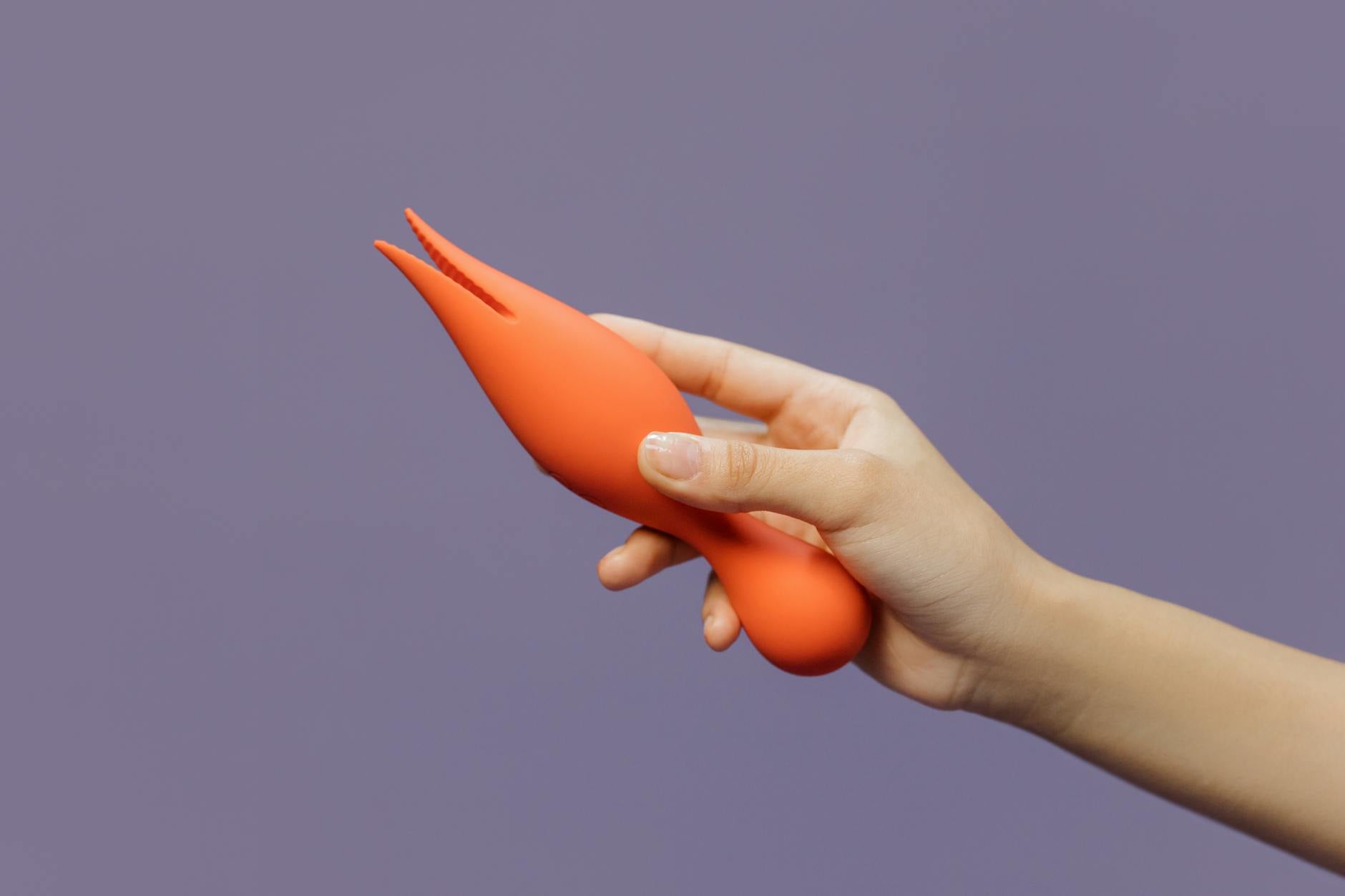
Photo by cottonbro studio on Pexels
The partner conversation, if there is one
If you're partnered and you're carrying religious guilt about pleasure, that often shows up in your sex life with them too. You might avoid initiating. You might have trouble receiving pleasure. You might unconsciously sabotage intimacy because pleasure feels dangerous.
Telling a partner, "I grew up with shame around sex and I'm working through that" is one conversation. Using a lemon clitoral vibrator or other sex toy together is a different one. They're worth separating.
Start with the first one. No tools. Just words. "I have some inherited beliefs about pleasure being bad, and I'm learning to unwind that. It's not about you. It's about me reclaiming my relationship with my own body."
Then, later, if you want to introduce a toy: "I want to explore pleasure in a new way. Would you be open to that with me?" Your partner isn't responsible for fixing your religious conditioning. But they can be a witness to your reclamation of it. That's different.
When shame flares up again (and it will)
Nervous system rewiring isn't linear. You'll have nights where you're using a lemon vibrator and suddenly the old messages come roaring back. "This is sinful. You're being selfish. Good women don't do this." That's not a sign that you're failing. That's just what the rewiring process looks like.
When it happens: pause. Acknowledge the feeling. "There's that old belief." Don't try to push through it or shame yourself for having it. Shame on top of shame just buries the original shame deeper.
Take a breath. Remind yourself: this is your body. Your pleasure. Your choice. Then decide what you want to do. Maybe you continue. Maybe you stop and try again tomorrow. There's no wrong answer. The point is you're choosing consciously, not reacting from fear.
Over time, these moments of flare-up get smaller and further apart. The new neural pathway gets stronger than the old one.
The power of reclamation
I've watched hundreds of clients move from a place of guilt and avoidance to a place where they can say, without hesitation, "I deserve pleasure." That shift is profound. It changes not just their solo experiences but how they show up in relationships, how they advocate for themselves, how they inhabit their bodies generally.
Using a lemon clitoral vibrator isn't the solution to religious conditioning. But it can be a tool in your toolkit. A way to send your body the message: "This is safe. This is mine. This is allowed."
Your pleasure isn't sinful. It's evidence that you're alive.
FAQ: Religious guilt and pleasure
What if I feel ashamed even thinking about buying a vibrator?
That's normal. Your nervous system learned that thinking about pleasure equals threat. Start with reading about sex toys, not buying one. Talk about it with a trusted friend or therapist. Give your system time to register that thinking is safe. When you're ready, buying it online (not in person) can feel less exposing. There's no deadline.
Can using a lemon vibrator actually help rewire shame, or am I just distracting from the real work?
Both. The internal permission work is essential. But your nervous system also learns through sensation and repetition. When you use a lemon clitoral vibrator in a conscious, gentle way, you're literally sending your body new information: pleasure is safe. This is allowed. You're not distracting from the work. You're doing the work somatically.
What if my partner is uncomfortable with me using toys because of their own religious background?
That's a separate conversation from your own healing. You get to reclaim your pleasure regardless of whether your partner is ready. But if you want them involved, start with individual therapy for each of you, then couples therapy. A therapist trained in sexual health can help both of you untangle inherited shame.
How long does it usually take to move past religious guilt around masturbation?
It's different for everyone. Some people shift dramatically in three months. Others take years. The timeline isn't the point. The consistency is. If you show your nervous system repeatedly that pleasure is safe, it will eventually believe you. Patience with yourself is part of the reclamation.
Is using a lemon vibrator different from other toys if you're healing from religious shame?
The suction sensation can help because it feels new to your nervous system, which doesn't immediately code it as "the shameful thing." But honestly, the tool matters less than your intention and consistency. If a different vibrator calls to you, use that. The real work is giving yourself permission and following through.
What if pleasure triggers trauma or panic?
If you have trauma related to your body or sexuality, working with a trauma-informed therapist is important before diving into self-pleasure practices. A vibrator isn't a replacement for therapy. It's a potential tool once you have professional support in place.
Moving forward
Reclaiming your pleasure after a religious upbringing isn't about becoming someone different. It's about becoming the full person you actually are. Your body, your desires, your capacity for feeling good. These aren't things to transcend. They're things to inhabit fully.
If you want to explore this further, consider reaching out to a therapist who specializes in religious trauma or sexual health. And if you have questions about how to use lemon vibrators or other toys, check out our buying guide for practical starting points.
Your pleasure is permission enough.