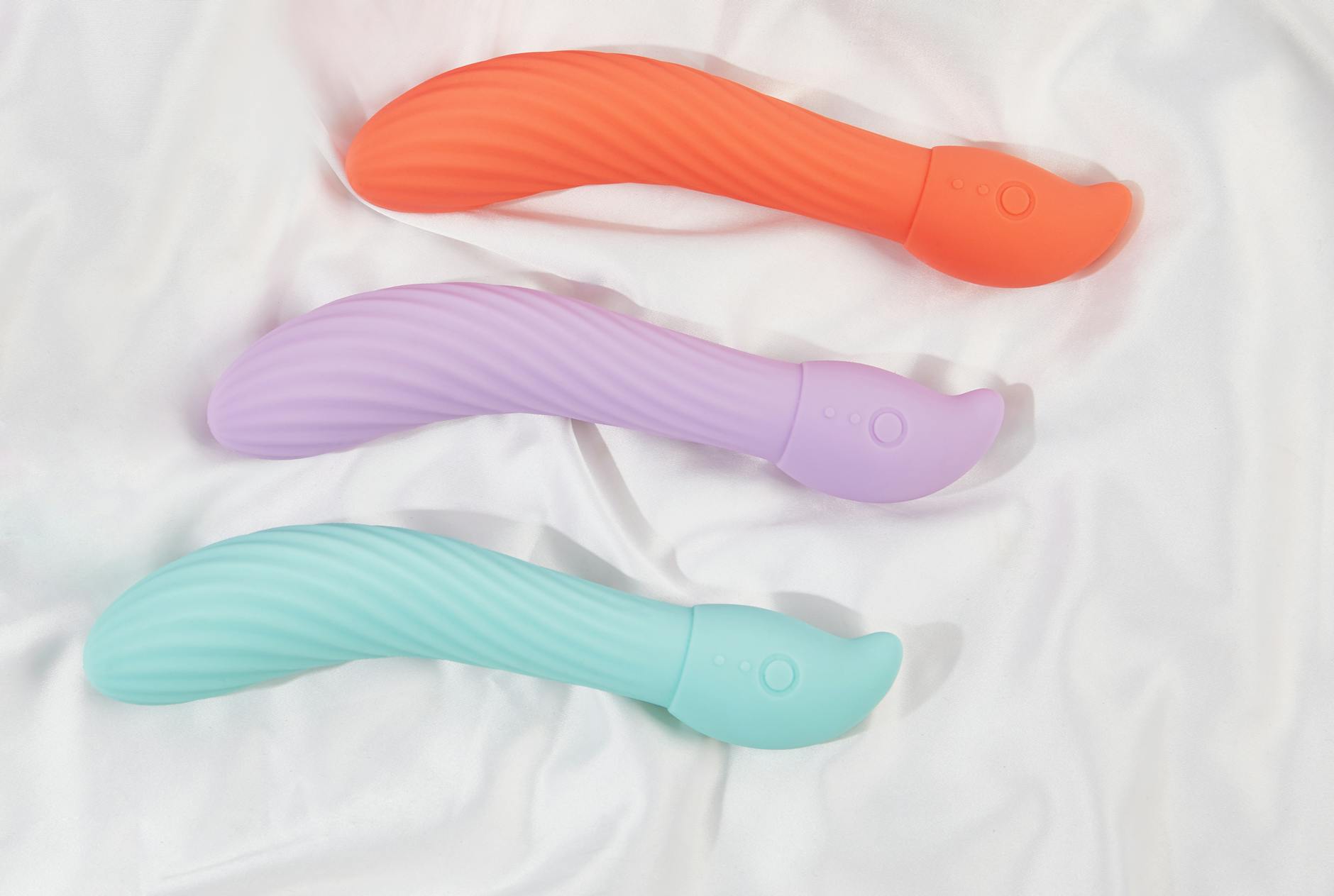
The thing nobody mentions about sensitive skin and lemon vibrators
Honestly, if you've got sensitive skin, you've probably been told to avoid sex toys altogether. That's not just wrong. It's frustrating. Because lemon clitoral vibrators are actually some of the gentlest, most controllable options out there. The difference between pain and pleasure often comes down to three things: material choice, prep work, and technique. Get those right, and sensitive skin becomes a non-issue.
I've worked with plenty of people who thought their skin sensitivity meant no toys, period. Then they tried a lemon vibrator with the right approach, and suddenly they had access to pleasure they'd written off as impossible. The difference is real, and it's achievable.
Why lemon vibrators are actually safer for sensitive skin
Let's talk about what makes sensitive skin sensitive first. Your vulvar tissue is lined with mucous membranes. That means it's permeable, reactive, and yes, easily irritated. But that permeability also means sensation travels faster and feels more intense. Traditional vibrators use friction and buzz. Lemon vibrators use suction and rhythmic pulsing. That's a fundamentally gentler stimulus because it doesn't require the same mechanical scraping that friction-based toys do.
The material matters too. Most hello nancy lemon vibrators are medical-grade silicone, which is non-porous, hypoallergenic, and can be thoroughly cleaned. That's not a luxury. That's essential for sensitive skin because bacteria and residual lubricant trapped in porous materials can cause real problems. Silicone doesn't trap anything.
One more thing: the intensity range. When you're using a clitoral vibrator designed for sensitive tissue, you have real control. Starting at pattern 1 on a lemon vibrator gives you gentle, rhythmic stimulation. You're not forced to choose between "nothing" and "intense buzz." That graduated control is the single biggest reason sensitive skin and lemon vibrators work together so well.
Step one: the skin prep that actually matters
You wouldn't apply makeup to unwashed skin. Same logic here. Clean skin is less irritated skin. Here's what to do before you even touch your vibrator.
Wash with warm water and a gentle, fragrance-free cleanser. You're not trying to sanitize. You're just removing sweat, lint, and anything else that might sit between the silicone and your tissue. Pat dry. Don't rub. Rubbing irritates sensitive skin further, especially in a sensitive area.
If you're planning to use lubricant (which I recommend for almost everyone, especially with sensitive skin), apply it to your tissue first, then a tiny bit to the toy. This distributes it more evenly and reduces the chance of the lube pooling in one spot and causing irritation.
Wait a minute or two after you clean. Wet skin is even more permeable than dry skin. A brief pause lets your tissue calm down after the wash and actually reduces irritation during use.
The lubricant choice that makes all the difference
Using the wrong lube is genuinely worse than using no lube at all. Here's why: the wrong lubricant coats your tissue with ingredients your skin disagrees with. Then you're not just dealing with vibration. You're dealing with vibration plus chemical irritation. Bad combo.
For sensitive skin, water-based lubricant is your baseline. Full stop. It's compatible with silicone, it absorbs into your tissue naturally, and it doesn't sit on top of your skin like a film. Brands matter though. Avoid anything with glycerin, parabens, propylene glycol, or "natural flavors." Those are common irritants for sensitive skin.
Better choices: Sliquid Naturals, Hanx, or Aloe Cadabra. These are formulated specifically for sensitive tissue. Yes, they cost more. Your comfort is worth it.
Silicone-based lubricant is tempting because it feels richer and lasts longer. Don't do it with sensitive skin. It sits on your tissue longer, traps bacteria, and is harder to rinse completely. Water-based absorbs and clears. That's what you want.
One practical note: lube gets warm during use. That's normal. What's not normal is lube drying out or getting sticky partway through. If that happens, add a tiny drop of water. Seriously. It reactivates the lube and keeps things feeling right.
Technique adjustments for sensitive clits
This is where most people get it wrong. They treat sensitive tissue like it's fragile. It's not fragile. It's just reactive. There's a difference.
Start at the lowest pattern. On a lemon vibrator, that's usually pattern 1 or 2. Spend a few minutes here. Not because you need to "warm up" in some mystical way, but because your tissue actually becomes slightly less reactive to stimulation after a few minutes of gentle input. It's called accommodation. Let it happen.
Position matters more than intensity for sensitive skin. Instead of direct, centered contact, try angling the lemon vibrator slightly so the suction cup sits just off-center. This spreads the stimulus across a wider area of tissue instead of concentrating all the pressure in one spot. Pressure concentration is what causes irritation. Distribution prevents it.
Don't hold it static. The best technique is gentle movement. Small circles, slow up-and-down motions, or even just lifting it slightly and setting it back down every few seconds. Movement prevents that uncomfortable "dead spot" feeling and reduces the chance of tissue irritation from sustained pressure.
If you're approaching orgasm and things start feeling uncomfortable, slow down or back off entirely. Some people with sensitive skin find that orgasm itself feels less intense if they go too hard beforehand. Patience actually leads to better sensation.
When to know your skin is telling you to stop
There's a difference between stimulation that feels intense and stimulation that feels wrong. Learn that difference fast.
Stimulation that's working: tingling, warmth, deepening sensation, building intensity. Stimulation that's not working: burning, stinging, sudden numbness, or a feeling of rawness. If you hit any of those second-group sensations, stop. Not "I'll push through." Stop. Now.
Swelling is also a signal. A tiny bit of swelling as blood rushes to the area is normal. Visible puffiness or swelling that's tender to touch means you've gone too far. That won't go away faster if you keep going. It'll just get worse.
Redness is normal during and immediately after use. It should fade within 30 minutes to an hour. If it's still there two hours later, or if it's accompanied by itching or burning, your skin is telling you something about either the toy, the lubricant, or the duration. Change one variable next time and see what shifts.
The post-use care that prevents problems
You cleaned before. Now clean after. Use the same warm water and gentle cleanser. Pat dry. This removes lubricant residue, which can dry and irritate your skin if it sits there.
Some people find that rinsing with plain water and then applying a tiny bit of coconut oil or a hydrating serum helps sensitive skin recover faster. That's optional, but if irritation is a pattern for you, it's worth trying.
Let your toy air dry completely before storing it. Moisture trapped in the toy and then your vulva again next time? Recipe for bacterial growth and irritation.
One last thing: if you're using a lemon clitoral vibrator regularly, replace it every 12-18 months even if it still works. Silicone degradation isn't visible, but it's real. Older toys can develop microscopic cracks that harbor bacteria. Fresh toy, lower infection risk, lower irritation risk.
When to bring in a doctor
If you're following all of this and still experiencing persistent irritation, itching, or pain, see a gynecologist. It might not be the toy at all. You might have a skin condition that needs different treatment. Dermatitis, eczema, or a contact allergy could make any toy feel irritating, no matter how gentle. Get it checked.
There's also genitourinary syndrome (thinned tissue from hormonal changes) that makes everything feel more irritated. That's highly treatable. Don't assume your body just can't handle toys. Sometimes your body just needs a little support to get there.
People also ask
Can you use lemon vibrators if you have eczema on your vulva?
Yes, but with extra caution. Eczema-prone skin needs the same prep work, but you might need to extend the waiting time between washing and use. Let your skin fully calm down. Use only fragrance-free, hypoallergenic lube. If you experience flares after using the toy, stop for a week or two and let your skin repair. When you start again, go even gentler. Most people with vulvar eczema find that lemon vibrators work better than traditional vibrators because the reduced friction causes fewer flares.
Is water-based lube really that important for sensitive skin?
Yes. Silicone lube, oil-based lube, and hybrid lubes all leave residue that sits on your tissue longer. Water-based is absorbed and clears naturally. For sensitive skin, that difference is significant. It's also the only lube type fully compatible with medical-grade silicone toys. Mixing silicone toys with silicone lube can cause the toy surface to degrade over time.
How do you know if it's the toy or the lube causing irritation?
Do a swap test. Use the same toy with a different lube, or use the same lube with a different toy. Whichever variable you change, see if the irritation improves. If it goes away when you swap the lube, you've found your answer. If it persists when you swap the toy, the toy isn't the problem. This takes discipline, but it's the fastest way to pinpoint the real culprit.
Is it normal for lemon vibrators to feel uncomfortable at first?
Yes and no. New sensation can feel weird. That's normal. But uncomfortable should clear up within two or three uses as your tissue accommodates. If it stays uncomfortable, something is wrong. Don't power through. Comfort and pleasure are the goals. If neither is happening, reevaluate your prep, lube, or technique before using it again.
Should you use different lube for different patterns on a lemon vibrator?
No. The lube serves the same purpose no matter which pattern you're using. What matters is that it stays in place and doesn't dry out. If you're planning to try multiple patterns in one session, apply lube once at the beginning and add a tiny drop of water if it gets dry. You don't need fresh lube for each pattern.
Can you switch between lemon vibrators and traditional vibrators if your skin is sensitive?
Yes, but not in the same session. Switching between different stimulus types (suction versus friction buzz) can overwhelm sensitive skin. If you want to try both, do it on different days so your tissue has time to return to baseline. Over time, you might find that one works better for your skin than the other. Most people with sensitivity find that lemon clitoral vibrators work better for sensitive clits because the stimulus is gentler and more distributed.
The bottom line
Sensitive skin and pleasure aren't mutually exclusive. They just require a different approach. The right lube, proper prep, graduated intensity, and smart technique turn sensitivity from a barrier into just another detail you manage. Your skin isn't stopping you. It's just asking you to listen. Do that, and lemon vibrators become exactly what they're designed to be: a way to feel good without feeling worse.
If you're still unsure about whether a lemon vibrator is right for your skin, reach out. We're here to help you figure out what works for your body.