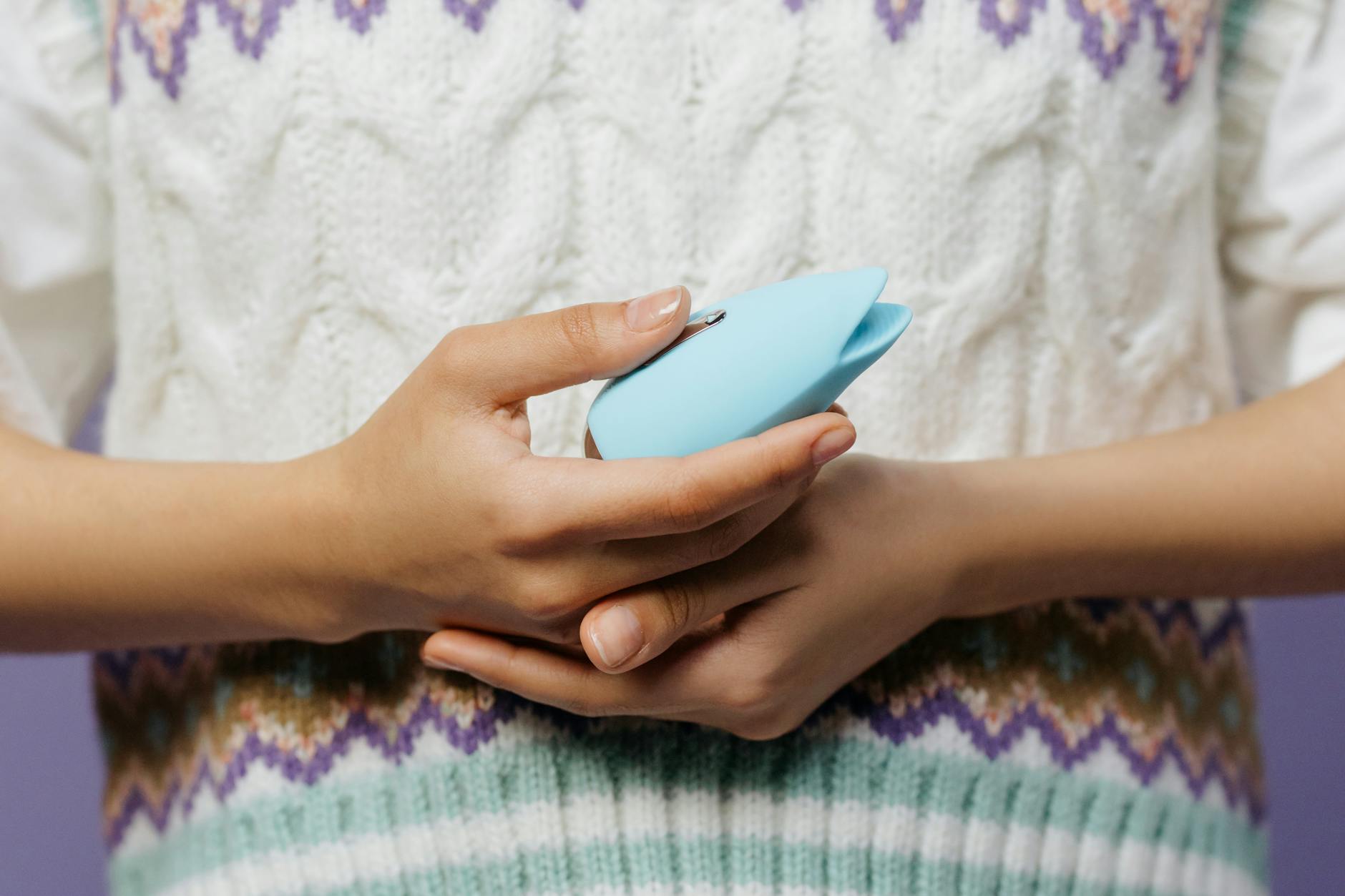
Let's talk about what a low pain threshold actually means
Having a low pain threshold doesn't make you broken or oversensitive in a bad way. It means your nervous system is picking up stimulation more acutely than average. That sensitivity can extend to pleasure too. The problem is that most vibrators are designed for the "normal" pain threshold audience, which leaves sensitive people either gritting through discomfort or abandoning toys altogether.
Lemon vibrators work differently. And if you have a low pain threshold, they might actually be the first toy that finally feels right.
Why intensity settings aren't the whole answer
Most traditional vibrators have a low setting that's still fundamentally intense. It's just less intense. The vibration pattern itself, the contact shape, and the sensation type stay the same. You're basically just turning down the volume on something that hurts.
Lemon clitoral vibrators use suction and air-pulse technology instead of direct vibration. This distinction matters enormously for sensitive people. Suction distributes pressure across a larger area of tissue instead of concentrating it in one spot. It's the difference between someone poking you firmly with one finger versus gently cupping your hand. Both apply pressure, but one is gentler by design.
The Lemon vibrator also has multiple intensity levels, but even the lowest patterns feel fundamentally different from a low setting on a traditional toy. You're not just turning down the same sensation. You're accessing an entirely different type of stimulation.
How suction sensation works on sensitive tissue
When you have a low pain threshold, direct friction or vibration can trigger a reflex response. Your body tenses up. Your nervous system reads the input as something to protect against, not enjoy. The stimulation becomes uncomfortable instead of pleasurable.
Suction works because it engages the nerve endings without that friction component. It's rhythmic, it's gentle by nature, and it doesn't require your tissue to be thick or robust to feel good. In fact, sensitive tissue often responds better to suction because there's less mechanical stress involved.
Many people with low pain thresholds report that their clitoris is hypersensitive to touch but not to suction. This isn't weird. It's a genuine neurological difference in how different types of stimulation land.
Starting with pattern one
Honestly, if you have a low pain threshold, you're probably used to skipping the first speed entirely on traditional toys. You jump straight to setting two or three because setting one still feels too intense.
With Lemon vibrators, pattern one is where most sensitive people stay. Not because you're limited, but because the sensation is legitimately pleasant at that level. There's no discomfort baked into the lowest setting.
Start here. Spend a full session or even several sessions just learning what pattern one feels like on your body. Most people assume they need to progress to higher intensities to have a "real" orgasm. That's not true. Intensity and orgasm aren't linked the way we've been taught. The patterns that work are the ones your body responds to, period.
The touch technique that makes a difference
Because you have a low pain threshold, the way you hold the Lemon vibrator matters more than it does for other people. Pressure and angle shift the entire sensation profile.
Try this. Hold the Lemon vibrator so it's making full contact with your clitoris, but apply minimal downward pressure. Let the device sit against you, not press into you. For sensitive people, light contact beats firm contact almost every time. You're not trying to create friction. You're letting the suction do the work.
Angle matters too. Some people find that coming at their clitoris from the side, rather than straight on, reduces intensity and makes the sensation feel more spread out. Others find that tilting the device slightly changes which nerve endings are being engaged. Experiment here. Your body will give you clear feedback about what works.
One more thing: keep your pelvic floor relaxed. When tissue is sensitive, the instinct is to tense up in protection. That tension actually amplifies pain signals. Taking five minutes to consciously relax your pelvic floor before you start, maybe with some deep breathing, genuinely changes the experience.
Lubrication for sensitive skin
You might think lube is less important with a suction device since there's no friction involved. You'd be wrong. Water-based lubricant creates a better seal between the device and your tissue, which actually makes suction more gentle and more effective.
Without lube, you might feel like you need to press the device harder to create a seal. With lube, the seal happens naturally, which means less pressure, which means less sensation intensity overall. It's counterintuitive but real.
If standard lube bothers you or you have sensitivities, there are hypoallergenic water-based options. The main thing is not skipping this step because you assume it's not necessary.
The warm-up that actually matters
For people with low pain thresholds, arousal isn't optional. It's foundational. Jumping straight to any toy, even a Lemon vibrator, without genuine arousal first will feel uncomfortable.
Build arousal intentionally. Read something that turns you on. Touch yourself in areas that feel good. Fantasize. Spend time doing whatever primes your nervous system to be receptive rather than protective. This isn't foreplay. This is preparation.
When your body is genuinely aroused, the sensation from a Lemon vibrator feels dramatically different than when you're starting from a neutral baseline. The same pattern that feels overwhelming when you're not aroused can feel perfect when you are.
What to do if pattern one still feels too intense
Some people have thresholds low enough that even pattern one is too much. That's not a failure. That's information.
First, make sure you're using enough lube and that your pelvic floor is actually relaxed. Nine times out of ten, one of those two things changes everything.
Second, try hovering the device slightly above your clitoris instead of direct contact. Some Lemon vibrators work through light clothing or through an extremely thin barrier because the suction is strong enough. You get the sensation without the intensity of direct contact.
Third, if your low pain threshold is connected to trauma, neurological conditions, or certain medications, it might be worth talking to a healthcare provider about how your nervous system is wired. Sometimes understanding the mechanism behind your sensitivity opens up options you didn't know existed.
When sensitivity shifts
Here's something nobody talks about: your pain threshold isn't fixed. It changes with stress, hormones, sleep, medication, and relationship dynamics. You might find that you use pattern one most of the time, but some days pattern two feels perfect. Other times, you need to go back to pattern one for a few weeks.
This is normal. It doesn't mean the Lemon vibrator stopped working. It means your nervous system is responding to what's happening in your life.
Track this if you want. Note what pattern feels good and correlate it with your stress levels, sleep quality, or where you are in your cycle. You might find patterns that help you understand your body better.
The pleasure you deserve
Having a low pain threshold often means you've been told that lots of things aren't "for people like you." That you're too sensitive. That you need to toughen up or just accept discomfort as the price of pleasure.
That's not true. Pleasure isn't one-size-fits-all, and it shouldn't require pain. Lemon vibrators are designed with people who feel everything in mind. That's not a limitation. That's the whole point.
People also ask
Can you use a Lemon vibrator every day if you have a low pain threshold?
Yes. Lemon vibrators are gentle enough for daily use, even for sensitive people. Some people use them daily and find their threshold actually becomes slightly less reactive over time because their nervous system gets accustomed to the specific type of stimulation. Others prefer using them several times a week. There's no rule. If daily use feels good and your tissue isn't irritated, you're fine.
Does having a low pain threshold mean you can't have strong orgasms?
Absolutely not. Orgasm intensity isn't determined by how much stimulation you can tolerate. Some of the most intense orgasms come from sustained, gentle stimulation rather than high-intensity input. Your body isn't broken because it prefers gentler sensation. It's just wired differently, and Lemon vibrators are actually better at creating the conditions for deeper pleasure in sensitive nervous systems.
What if the Lemon vibrator still feels too intense even on the lowest pattern?
Try these adjustments in order: increase lubrication, ensure your pelvic floor is genuinely relaxed, make sure you're fully aroused before starting, and try hovering the device slightly above direct contact. If you've tried all of those and it's still too much, you might benefit from talking to a pelvic floor physical therapist or a healthcare provider who specializes in sexual health. Sometimes low pain thresholds connect to underlying tension or medical factors that can be addressed.
Is there a way to gradually increase your pain threshold over time?
Technically yes, but it's not recommended as a goal. Some people find that consistent use of a Lemon vibrator gradually makes their tissue less reactive, which can feel like their threshold has increased. But forcing yourself to tolerate higher intensities isn't the same as actually increasing your threshold, and it defeats the whole purpose of having a toy designed for sensitive people. If your pleasure is good at pattern one, stay there.
Do you need a specific type of lubricant for sensitive people using Lemon vibrators?
Water-based lube is always your safest bet with silicone toys. If you have sensitivities to common ingredients, look for hypoallergenic formulations or ones designed for sensitive skin. Some sensitive people do better with slightly thicker lubes that create a better seal with less product. Experiment to find what works for your body, but don't skip this step thinking it's less important with suction devices.
Can Lemon vibrators help if your pain threshold is connected to anxiety or past trauma?
Lemon vibrators can be part of the picture, but they're not a cure. If your low pain threshold is tied to trauma or anxiety, the device itself works best alongside other support like therapy, breathing practices, or working with a pelvic floor specialist. A Lemon vibrator designed for gentle sensation can help your nervous system learn that not all stimulation is threatening, but that learning works better with professional support.