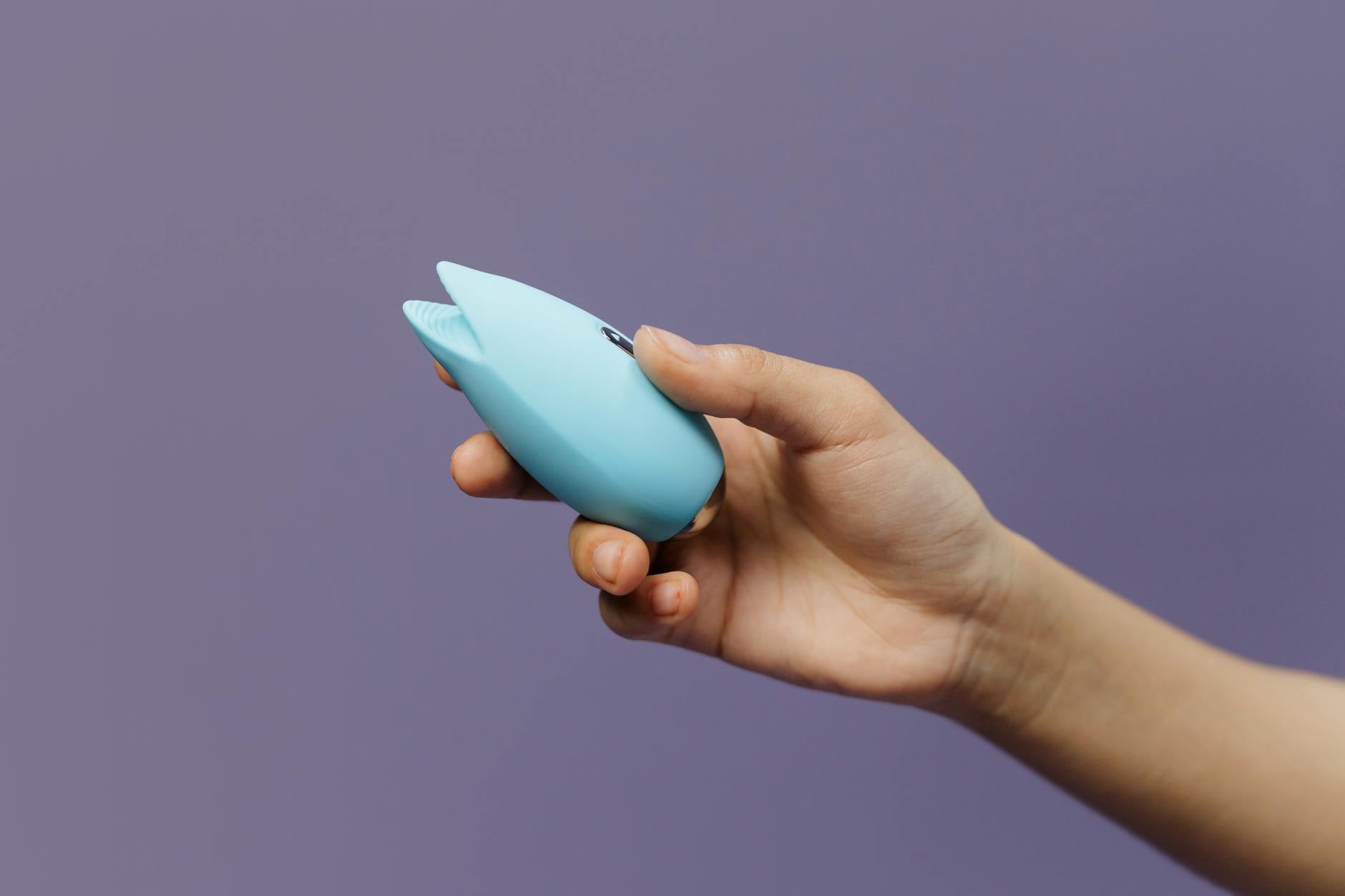
Let's talk about the pleasure paradox
You want to feel more. Not pain, not numbness—more. That gap between "I'm not feeling much" and "I'm feeling everything" is where most people get stuck, bouncing between underestimulation and discomfort.
Here's what I've learned from years of working with couples navigating this exact frustration: stronger sensation doesn't come from turning everything up to 11. It comes from understanding how your body builds pleasure in layers, and how lemon clitoral vibrators are uniquely designed to let you control that escalation without forcing intensity you're not ready for.
Why pressure and pain aren't the same thing (but they feel confusing)
Your clitoris has roughly 8,000 nerve endings concentrated in an area the size of a pea. That density is a gift—it's why you can feel subtle variations others miss. It's also why direct pressure, even from a well-meaning partner or toy, can feel sharp, raw, or overwhelming rather than pleasurable.
The lem vibrator works differently. Instead of grinding or pressing, it uses gentle suction combined with micro-vibrations. This means you're stimulating the nerve endings without the mechanical force that often reads as "too much" or "sharp."
That's not just comfort. That's precision. You get to feel more without bracing against pain.
The sensory threshold map: where you actually are
Before you escalate anything, you need to know your starting point. Here's how I guide people through this:
Level 1: Barely there. You notice the sensation exists but it's gentle, almost meditative. This is your baseline—how you feel at rest.
Level 2: Present and grounding. You're aware of the toy, it feels intentional, but you're not climbing toward orgasm yet. This is your warm-up zone.
Level 3: Building. Arousal is rising. You could keep going or pull back. No urgency either way.
Level 4: Committed. You're clearly headed toward orgasm. The sensations feel necessary now, not optional.
Level 5: The edge. You're close. Everything feels heightened and focused.
Level 6: Peak. The orgasm itself.
Most people who say they "can't feel anything" are actually stuck between Level 1 and 2. They're not broken. They're just starting from a place that needs a different approach than the one they've been using. A lemon clitoral vibrator lets you spend time at Level 2 and 3 without fatigue, building arousal steadily instead of yanking yourself forward.
How to use a lemon vibrator for escalation without shock
Start at pattern 1. I mean it.
If you've only used other clitoral vibrators or wand-style toys before, pattern 1 on the lem might feel almost nothing. Don't jump to pattern 5. Spend three to five minutes at pattern 1. Let your body remember what subtle stimulation feels like. This isn't wasted time—this is calibration.
After your arousal begins to shift (you'll feel a slight warmth, a gentle pulse of interest), move to pattern 2. Stay there until the buildup feels natural, not forced. You're not racing toward the finish line. You're teaching your body that sensation can stack and deepen.
When you're ready (and ready is your call, not the toy's), try pattern 3. Notice the difference. Pattern 3 isn't twice as intense as pattern 2. It's a clean step up. Your clitoris doesn't have to brace for a sudden jolt. It has time to adjust, to open, to want more.
This pacing is why the lem vibrator is different from toys that jump from a buzz to a roar. The escalation feels natural because your nervous system isn't hijacked. Your pleasure is in control.
The placement and angle game
Stronger sensation also means smarter positioning. Your clitoris isn't one flat target. The glans (the visible part) is more sensitive than the shaft. The shaft is more sensitive than the hood. If you're pressing hard against the glans because you "want to feel it," you're fighting against your own nerve density.
With a lemon sucker-style vibrator like the lem, you have options: direct contact with the glans, contact through the hood (which filters intensity), or angled contact on the shaft. Experiment while you're at patterns 1 and 2. The sensation shifts dramatically.
Many people discover that they do feel plenty—they just weren't using an angle or coverage that worked for them. The moment you find the right placement, suddenly everything registers. That's not a stronger toy. That's better technique.
When arousal itself amplifies sensation
This is the part most conversations skip: your sensitivity changes as you warm up. Your clitoris actually becomes more engorged, more nerve-accessible, more responsive the more aroused you become. That's why edging—staying at Level 3 for extended periods before moving to Level 4—creates such intense sensations later.
Instead of chasing intensity from moment one, I recommend building anticipation. Use your lemon clitoral vibrator at a moderate pattern for 10-15 minutes, staying in Levels 2-3. Don't try to orgasm. Just let arousal accumulate. Your body will naturally become more sensitive. Then, when you decide to push toward Level 5, the same pattern that felt subtle 10 minutes ago now feels unmissable.
Your nervous system just needed time to wake up. The toy didn't have to work harder. You did—by giving yourself permission to go slow.
Pain signals to take seriously (and the ones that aren't pain)
Let's be direct: some sensations feel intense but good. Sharp, bright, almost electric. That's not pain. That's a high-threshold pleasure response. It can feel shocking if you're used to dull stimulation, but it's not injury.
Actual pain—burning, stinging, achiness that lingers—that's different. If you feel that, stop. It usually means one of three things: you're dehydrated (seriously—go drink water), your tissues are irritated (maybe from friction or friction from clothing beforehand), or you've overstimulated the same area for too long.
Most people who escalate too fast aren't chasing pleasure. They're chasing evidence that the toy works. They override discomfort to "prove" they can feel it. Don't do that. Genuine pleasure never requires you to tough it out.
The partner dimension: stronger sensation with someone else
If you're using lemon vibrators with a partner, the pacing conversation matters even more. Your partner might want to escalate faster than you need, or slower. They might assume that building intensity means turning up the pattern, when what actually works is maintaining a pattern longer.
Here's what helps: tell them your threshold map. Not "go slow," but "I need about five minutes at a moderate setting before I feel ready to shift up." Give them permission to watch for your cues instead of assuming. The most connected couples I work with aren't the ones using the fanciest toys. They're the ones who've learned to read each other's actual responses instead of performing a script.
Rhythm changes sensation more than intensity
One more thing that surprises people: switching patterns mid-arousal creates intensity without ramping power. If you're at pattern 2 and shift to pattern 3 for 30 seconds, then back to pattern 2, that contrast makes both feel sharper. Your nervous system responds to change, not just to amplitude.
A lemon vibrator's range of patterns—from gentle pulses to wave-like rhythms to steady buzzes—gives you this toolkit. You're not choosing between "weak" and "strong." You're choosing between different types of stimulation, and combining them creates novelty and depth.
People also ask
Can I use a lemon vibrator every day without losing sensitivity?
Yes, if you vary your approach. If you use the same pattern, same placement, same timing every day, your nervous system adapts and it starts feeling like less. That's normal desensitization, not damage. The fix is rhythm variation. Try different patterns, different placements, different durations. Your body will stay responsive.
Does stronger sensation always mean faster toward orgasm?
Not at all. Some people build arousal slowly over 20 minutes at moderate intensities and have intense orgasms. Others climax in four minutes with high-pattern stimulation. Intensity and speed are separate variables. Stronger sensation just means you're feeling more detail. How long the buildup takes is about your unique arousal curve, not the toy.
What if one partner wants intense sensation and the other doesn't?
Take turns. Seriously. Solo sessions with your lemon clitoral vibrator aren't selfish or separate from partnered pleasure—they're part of your sexual health. If one person in a relationship chases escalation and the other prefers subtlety, trying to compromise in every session leaves both people frustrated. Instead, honor each person's actual response and integrate that information when you're together. You might find that low-intensity warmup alone becomes the foreplay that primes you both for shared pleasure.
Can stronger sensation come from technique instead of a different toy?
Completely. Most people using a lemon sucker for the first time think "I need a different toy" when what they actually need is five more minutes of warm-up or a different angle. The toy you have is often more versatile than you've tested. Before upgrading, experiment with placement, pacing, and rhythm. If you've done that and you genuinely want more power, then you look at other options. But most people haven't actually explored what their current tool can do.
What if intense sensation feels scary instead of good?
That's real. Sometimes fear of intensity—of losing control, of feeling too much, of your body responding in ways you can't predict—blocks pleasure before sensation even gets there. That's not a toy problem or a technique problem. That's an emotional territory you might want to explore with a therapist. Pleasure is supposed to feel safe. If it doesn't, the issue isn't stronger sensation. It's building trust with your own body first.
Is there a "right" level of intensity I should be chasing?
No. Your level is your level. Some people have the most satisfying orgasms at pattern 2 on a lemon vibrator. Others need pattern 5 or a different toy entirely. The goal isn't to reach some objective intensity threshold. It's to find the sensations that make you feel most like yourself—most present, most aroused, most alive. That might look nothing like what works for your partner or your friends. That's the whole point of having control over your own pleasure.
The real difference
Stronger sensation without pain isn't about forcing your body to feel more. It's about removing the barriers—tension, wrong angles, overstimulation, poor pacing—that keep you from feeling what's already there. A lemon clitoral vibrator is a tool that lets you control that process: gradual escalation, multiple sensory options, precision without punishment.
You don't need a stronger toy. You need better information about how your own nervous system works, and permission to pace yourself. Once you have both, sensation builds naturally.
Ready to reclaim your pleasure? Start with your current approach, try the pacing strategy outlined here, and notice what changes. If you're still stuck or if you want to talk through your specific situation, reach out. This is what I'm here for.