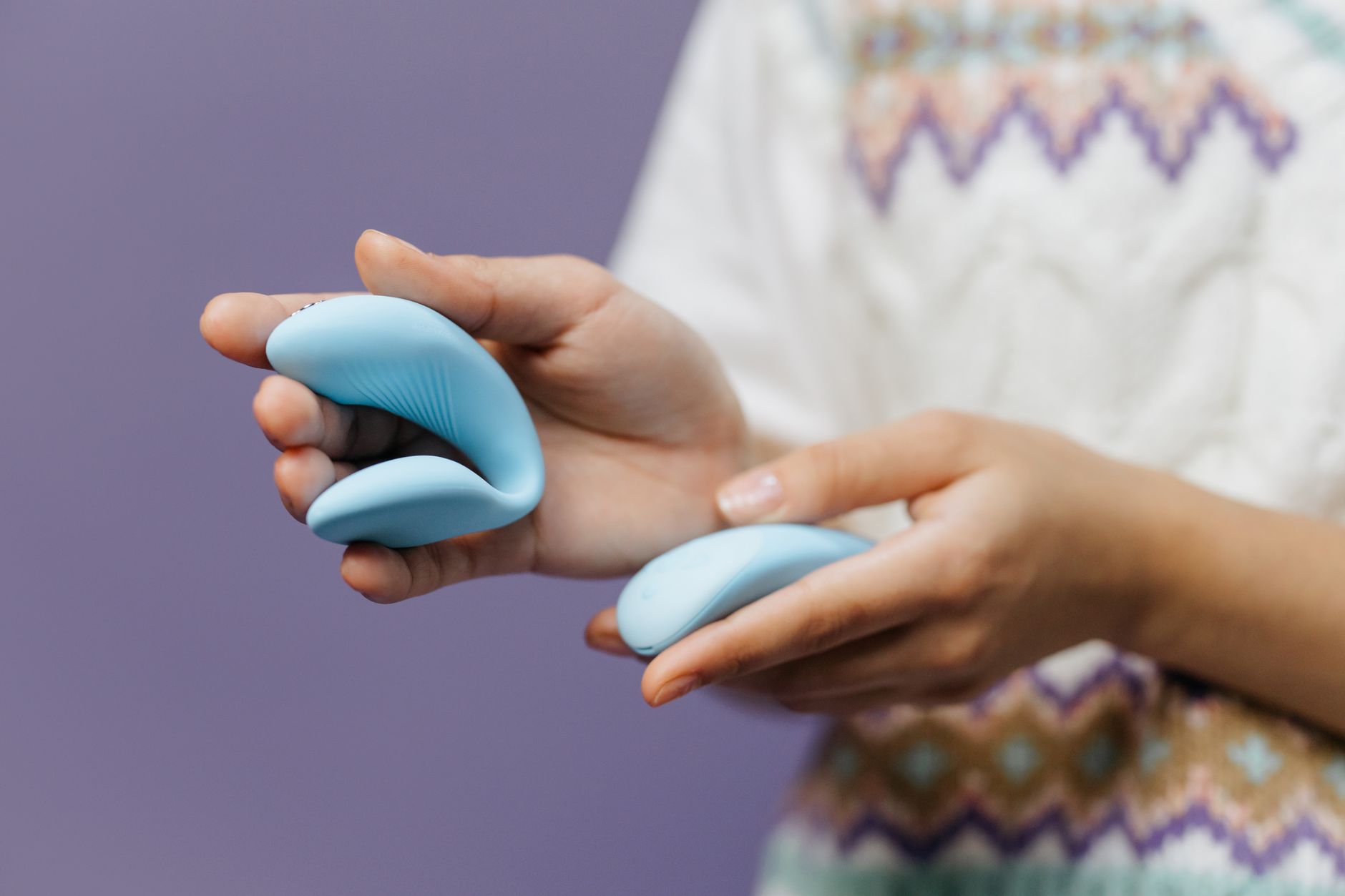
Let's start with the honest part
Your pelvic floor is probably tighter than it should be. If you've been stressed, if you've been avoiding pleasure, if you've had past tension or trauma, or if you just carry anxiety in your hips like most people do, your pelvic floor is clenched. And a clenched pelvic floor doesn't feel good with anything. Not a partner, not a toy, not even your fingers.
The weird part? That tightness actually blocks the sensations a lemon clitoral vibrator is designed to deliver. So let's talk about why, and what changes when you release the tension first.
Why pelvic floor tension kills pleasure
Your pelvic floor is a layer of muscle that sits at the base of your pelvis, supporting your bladder, uterus, and bowel. It's also where a huge amount of sexual sensation lives. But here's the problem: that same muscle group is also where most people store stress. You clench it when you're anxious. You hold it tight when you're self-conscious. You lock it down when you're protecting yourself emotionally.
When the pelvic floor is chronically tense, blood flow decreases. Arousal builds slower. Sensation feels muted or even painful. A lemon vibrator can't create pleasure if the muscular foundation underneath is braced against feeling anything.
Most women with pelvic floor tension report one of three things: numbness ("I barely feel anything"), pain ("It hurts even when I want it"), or disconnection ("Physically I'm responsive but I feel nothing emotionally"). Lemon vibrators excel at the first two, but only after you release the underlying tension.
The release work comes first
You don't need a physical therapist (though they help). You need three things: awareness, breath, and conscious relaxation.
Awareness comes from checking in. Right now, squeeze your pelvic floor like you're stopping the flow of urine. Hold it for three seconds. Now fully release. Did you feel the difference? That contrast is your baseline.
Most people with chronic tension can't actually feel when they're holding versus releasing. That's the first problem to solve. Spend five minutes a few times a week just squeezing and releasing, noticing the difference.
Breath softens tightness faster than anything else. Shallow chest breathing keeps your whole body in a protective crouch. Deep belly breathing signals safety to your nervous system. When you inhale through your nose for a count of four, hold for four, and exhale for six, your pelvic floor naturally relaxes.
Do this before using a lemon clitoral vibrator. Not during. Before. Five minutes of intentional breathing changes the game.
Conscious relaxation means actively releasing what you've been holding. This isn't meditation. On the exhale, imagine your pelvic floor softening like it's melting into the chair beneath you. Not squeezing. Not trying to "fix" anything. Just releasing what's already there.
If you can't feel it or it feels impossible, you might have hypertonic pelvic floor dysfunction, which is genuinely common. A pelvic floor physical therapist (yes, they exist, and yes, it's legitimate medicine) can teach you release techniques in two or three sessions that change everything. It's covered by most insurance.
How lemon vibrators fit into release work
Once you've done the breathing and release work, a lemon clitoral vibrator becomes a tool for rebuilding sensation.
Lemon vibrators use gentle suction rather than direct vibration. That's important here because suction doesn't demand an aggressive response from your body. It invites. The rhythm of the suction mimics blood flowing to tissue. It's calming in a way that helps your pelvic floor stay relaxed instead of re-clenching.
Start on the lowest pattern. Pattern one or two, if you're using the Lem. Not because you need to "work your way up," but because your nervous system needs permission to relax. High intensity can retrigger a protective response.
Apply the lemon vibrator gently. The point isn't to force sensation or chase an orgasm. The point is to prove to your body that feeling is safe. That pleasure doesn't require clenching. Some sessions, you might not orgasm. That's fine. You're retraining your nervous system, not chasing a finish line.
The actual practice
Here's what works:
First, spend ten minutes on breathing and gentle pelvic floor release. Lie down, hand on your belly, focus on lengthening your exhale.
Second, apply water-based lubricant to your vulva. If pelvic floor tension has been present for a while, tissues might feel a bit drier. The lube isn't extra; it's necessary.
Third, apply the lemon vibrator on the lowest setting. Let the suction settle against your clitoris. Don't move it around aggressively. Let it sit. Notice what you feel without trying to intensify it.
Fourth, keep breathing. If you notice your pelvic floor starting to tense again (and it will, because tension is a habit), exhale and consciously release. You might need to do this five times in one session. That's normal.
Fifth, if you feel arousal building, let it. But don't chase it. Keep the intensity low. Low arousal that feels safe is better than high arousal that retriggers tension.
What changes over time
With consistent practice (twice a week is enough), you'll notice shifts in two to three weeks.
First, sensation sharpens. Numbness lifts. You start feeling the suction more clearly.
Second, you can stay relaxed longer. Your pelvic floor stops reflexively clenching when you use the lemon vibrator.
Third, pleasure feels less like a performance and more like something happening to your body rather than something you're forcing.
Most people with pelvic floor tension have spent years treating their body like a problem to fix. Lemon clitoral vibrators, paired with release work, reframe it: your body is just waiting for permission to feel safe again.
That permission is something you give yourself, one breath at a time.
When to get professional support
If pain persists after four weeks of consistent practice, or if you genuinely can't relax your pelvic floor even with breath work, pelvic floor physical therapy is the move. This isn't weakness. It's expertise. A PT can identify where the tension lives, teach you release techniques specific to your pattern, and often solve the problem in six to eight sessions.
If you're dealing with past sexual trauma, talking to a trauma-informed therapist alongside the physical work helps. Tension often lives where trauma does. Both need attention.
Your pleasure matters. Pelvic floor tension doesn't have to be permanent. And lemon vibrators work beautifully once the foundation is ready.
People also ask
Can pelvic floor tension cause complete numbness during sex?
Yes. Chronic tension restricts blood flow to the entire vulva, not just the pelvic floor. Many people describe it as "being touched through a wall." The sensation is there, but muted. Releasing the tension with breath work and gentle vibration usually restores full sensation within two to four weeks of consistent practice.
Is pelvic floor tension the same as vaginismus?
Not quite. Vaginismus is a reflex where the pelvic floor muscles involuntarily clench when you try penetration. Pelvic floor tension is chronic holding without the reflex. They often co-exist, and both respond well to the same release techniques. A pelvic floor PT can distinguish between them and treat accordingly.
Will using lemon vibrators make my pelvic floor tighter?
Not if you're using them correctly. Low intensity, consistent breathing, and stopping before exhaustion actually teach your pelvic floor to relax. High intensity without release work can retrigger tension, so start low. Patience rewires faster than force.
How long does it take to release pelvic floor tension?
Two to three weeks of consistent practice if you're doing the breathing and release work. Four to six weeks if you're only using the vibrator. Pelvic floor physical therapy speeds this dramatically. Some people feel a shift in the first session.
Can I use lemon clitoral vibrators if I have diagnosed pelvic floor dysfunction?
Yes, but start even lower than you think you need to. Work with a pelvic floor PT who can give you green light on intensity and frequency. They'll help you know when your body is ready to progress. How to Use Lemon Vibrators When You're Recovering From Sexual Trauma covers similar nervous-system-sensitive approaches if you want deeper context.
Can stress cause pelvic floor tension to come back?
Absolutely. Tension is a stress response. After you've released it, maintaining it means keeping stress managed, breathing consciously, and using lemon vibrators regularly (not aggressively). If tension resurfaces, you know how to release it now. That skill doesn't disappear.
The bottom line
Pelvic floor tension is one of the most common reasons pleasure feels blocked. And it's also one of the most fixable. Lemon vibrators are built for gentle, nervous-system-friendly stimulation. Paired with breath work and conscious release, they become a powerful tool for rewiring your relationship with sensation. Your body isn't broken. It's just been protecting itself. Time to show it it's safe to feel again.
If you're struggling to move forward alone, reach out. A good therapist or pelvic floor PT can accelerate the process. You don't have to white-knuckle this.