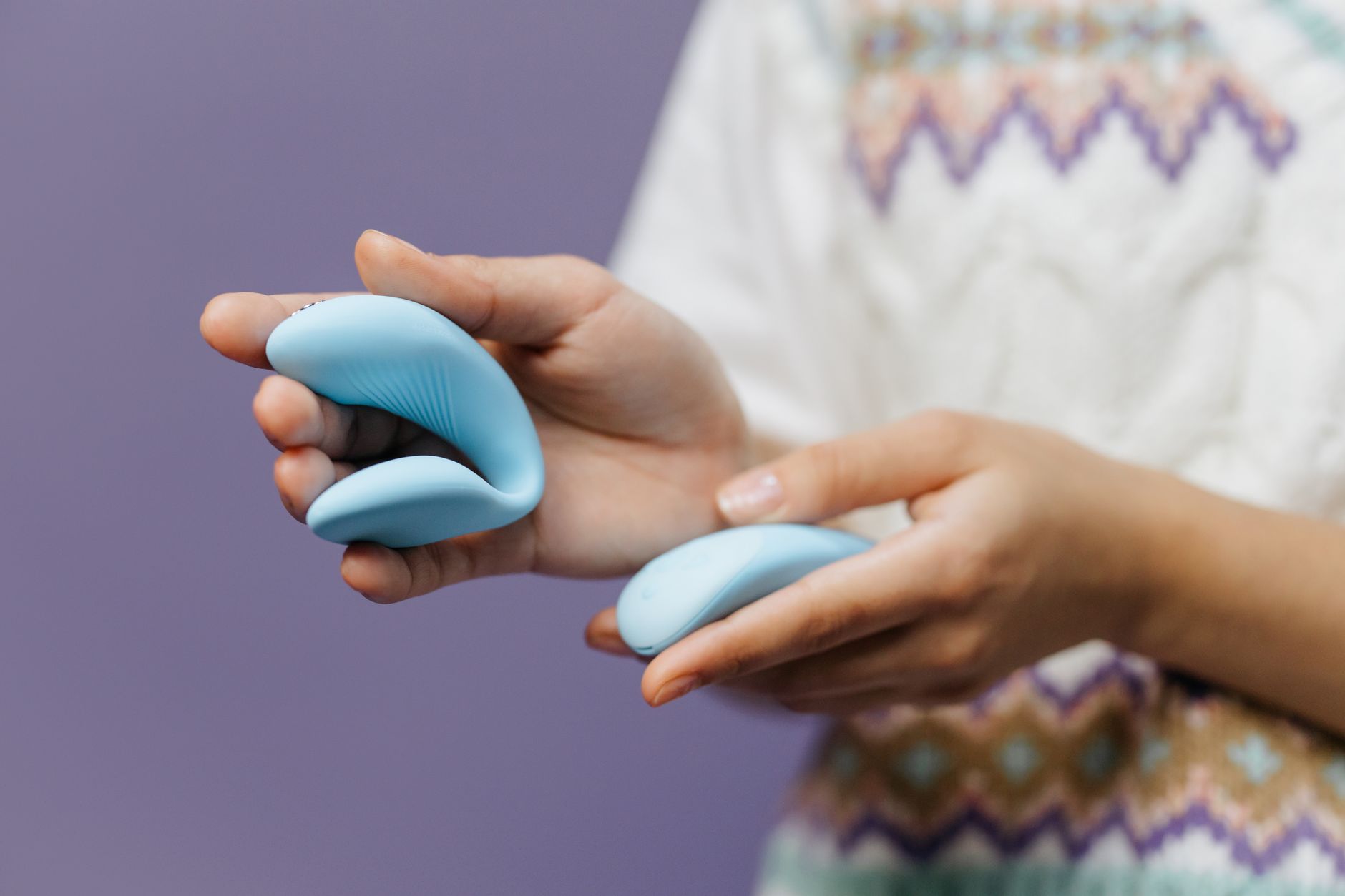
Let's be real about partner anxiety with toys
Here's the thing: your partner probably isn't intimidated by the toy itself. They're intimidated by what they think it means. They're worried it implies they're not enough. They're anxious about doing it "wrong." They're wondering if bringing lemon vibrators into your sex life is a referendum on their performance.
None of that is actually true, but those fears are real. And if you ignore them, you'll end up with a beautiful lemon clitoral vibrator sitting in a drawer while tension simmers under the surface.
The good news: used intentionally, a lemon vibrator can actually deepen partnership and confidence. It's not a replacement for your partner. It's an invitation to participate differently.
Understanding why partners feel threatened (and why they shouldn't)
Most people grow up thinking partnered sex means one person doing something to the other person, and if it works, that person is "good at sex." When a vibrator enters the picture, suddenly there's a third party that has a specific job. It can feel like a judgment call.
But here's what's actually happening physiologically: your clitoris has about 8,000 nerve endings concentrated in a small area. A lemon vibrator delivers consistent, focused stimulation that's literally impossible for a hand or tongue to match. That's not a criticism of your partner. That's anatomy.
When your partner uses a lemon clitoral vibrator on you, they're not being replaced. They're gaining access to a tool that lets them pleasure you in a new way. They become the person who knows how to make you feel incredible using this tool.
That's not intimidating. That's powerful.
The conversation before you even touch the toy
Don't introduce a lemon vibrator mid-sex and hope it goes well. That creates pressure, not intimacy.
Instead, pick a moment when you're both clothed, calm, and not trying to have sex. Maybe over coffee. Maybe while doing dishes. Say something like: "I've been thinking about trying a clitoral vibrator together. Not because anything is wrong. Because I think it could feel amazing, and I want you to be part of it."
Listen to what comes up for them. If they say "I'm worried I won't know what to do," that's valuable information. You're not reassuring them into compliance. You're getting specific about the anxiety so you can actually address it.
A good response: "You'll figure it out with me. We'll go slow. There's no wrong way to do this, and I'll tell you what feels good."
If they say "I'm worried it means I'm not enough," that's a different conversation. It needs a direct answer: "You are enough. This isn't about replacing you. It's about adding something that helps me feel more of what you already make me feel."
How to frame the first experience
Make it collaborative, not performative. This isn't a demonstration of your partner's sexual prowess. It's exploration together.
Start without pressure to do anything. Lie down together. Let your partner hold the lemon vibrator (without turning it on) and get familiar with it. How does it feel in their hand? How does the shape make sense? Ask them questions: "Does this feel easy to hold?" "What do you think this part does?"
Then, when you're both ready, start with the lowest setting. Your partner can hold it, or you can guide their hand. The key is that they're actively involved. They're watching your face. They're hearing you. They're the person making this happen.
Many partners report that the first time they use a lemon clitoral vibrator on someone they care about, they feel a profound sense of connection. They're watching someone they love experience intense pleasure. They're the architect of that. That's not threatening. That's intimate.
The rhythm that builds confidence
Start with exploration mode. Your partner holds the lemon vibrator and experiments with different patterns, speeds, and angles. You're not trying to reach orgasm. You're mapping what feels good together.
Most lemon vibrators have multiple settings. Encourage your partner to try them. "What happens if you slow down?" "Does this pattern feel different?" "Does it matter where you hold it?"
This does two things at once. First, your partner learns the tool, which kills the intimidation. They're not guessing anymore. They have data. Second, you're genuinely discovering what feels best, which means the experience is tailored to you, not generic.
After a few sessions like this, your partner's confidence will shift. They'll start to predict what you'll like. They'll notice patterns. They might say "I think you love this setting" or "Can I try something?" That's the moment when the tool stops being scary and becomes part of your shared sexual language.
When to involve penetration (and when not to)
Some people love combining clitoral stimulation with penetration. Some people find it overwhelming. This is where your partner's role becomes really important.
If you want to explore both at once, the lemon vibrator is your partner's tool. They control it while you control penetration (if it's happening), or they do both, or you coordinate. The point is: they're still the active partner. They're not watching from the sidelines.
Many partners find that this version feels most intimate because you're both doing something at the same time. There's no moment where the toy takes over and your partner disappears.
How to handle if things feel awkward
They might. Awkwardness is normal and doesn't mean you're doing it wrong.
If your partner suddenly feels self-conscious, pause. Not a big dramatic pause. Just a natural stop. Ask: "You okay?" Sometimes it's nothing. Sometimes it's "I don't know if I'm holding it right." Solve that specific problem.
If you stop feeling good, tell them. "Can you move it a bit higher?" "That's too intense." Your feedback is what helps your partner learn. They're not mind readers. They need information to feel competent.
After the first few times, it gets easier. The awkwardness fades because you've built a shared understanding of how this works, what feels good, and how you can both participate.
The deeper shift that happens
When a partner becomes comfortable using a lemon clitoral vibrator with you, something changes in the relationship. They realize you're not asking them to be perfect at something impossible. You're asking them to participate in your pleasure in a new way.
That's empowering for them. And when someone feels empowered in your sex life, they tend to show up differently everywhere else too. There's less resentment. There's more curiosity. There's less pressure to be perfect and more permission to actually enjoy each other.
Your partner wanting involvement isn't intimidating. It's actually the best possible foundation for using lemon vibrators together. They care enough to want to be part of it. They're willing to learn. They just need to know it's safe to try.
Give them that safety. Show them they can do this. Watch what happens next.
People also ask
How do I bring up vibrators with a partner who seems uncomfortable with the topic?
Start small and pick the right moment. Not during sex, not in anger, not as a random text. A casual conversation when you're both relaxed works best. Frame it around your pleasure, not around anything missing in what they do. "I've been curious about this, and I'd love to experience it together" lands very differently than "We need to spice things up." Also be prepared that their discomfort might not be about the vibrator at all. It could be about feeling insecure, or having different associations with toys. Listen more than you talk, and you'll learn what's actually going on.
What if my partner is worried a vibrator will make me less interested in sex with them?
This is probably the most common fear, and it deserves a direct answer. The truth is that lemon vibrators don't reduce desire for partnered sex. If anything, they increase it because you're experiencing more pleasure overall. People who have more satisfying sex tend to want more sex. But your partner needs to hear that from you, not as a reassurance, but as a genuine statement of what you've experienced or what you expect to experience. And then they need to experience it. The proof isn't in words. It's in the fact that using a lemon vibrator together makes your sex life richer, not a replacement.
Can my partner use a lemon clitoral vibrator on me if they've never used one before?
Absolutely. Actually, there's something nice about learning together. You're not comparing them to some imagined expert. You're both figuring it out. Start with the lowest setting, go slow, and communicate clearly about what feels good. Most partners pick it up quickly because the feedback loop is immediate. They try something and instantly know if it's working because they can see and hear your response. That's way more intuitive than a lot of other skills.
How do we make using a vibrator feel intimate and not clinical?
Context matters more than the tool. Make sure you're in a comfortable space. Make sure there's no pressure to achieve anything specific. Make sure you're touching each other, making eye contact, and being present. The vibrator is just one element. The intimacy comes from the attention and care your partner is bringing to your pleasure. You could use the most expensive lemon vibrator in the world in a rushed, resentful moment and it would feel terrible. Or you could use the simplest tool in a slow, attentive way and it would feel incredible. Focus on the connection, and the tool will enhance it naturally.
What if I orgasm really quickly with a vibrator but not with my partner alone?
That's actually pretty common and not a problem. The sensation is different. That doesn't mean partnered sex without the vibrator is bad. It just means they're different things. Some people enjoy the variety. Some people like mixing them. The key is talking about it before it becomes a source of shame or resentment. "I come faster with this tool, and that doesn't mean I enjoy you less" is a true and important thing to say out loud.
How can my partner feel less like they're just operating a toy?
By being involved in all the ways that matter beyond just holding it. They're watching your face. They're hearing you. They're adjusting based on your feedback. They're making decisions about which setting to use, where to focus, how fast to go. That's not operating equipment. That's partnered pleasure. If they're feeling distant or mechanical, the issue probably isn't the vibrator. It's that you both need to be more connected to each other while it's happening. Look at them. Talk to them. Touch them too. Make it a mutual experience, not a performance.